
Sport's Safe Haven: When Capital Tightens, Experience Becomes Gold
**Core answer** Giá vàng đứng yên chờ quyết định lãi suất của Cục Dự trữ Liên bang Mỹ, phản ánh dòng tiền toàn cầu đang tìm nơi trú ẩn. Cơ chế này lặp lại trong thể thao: khi chi phí vốn tăng, câu lạc bộ và giải đấu chuyển từ tài sản đầu cơ sang tài sản an toàn, đẩy giá trị kinh nghiệm lên trên tiềm năng. **Key facts** - FOMC họp hai ngày, quyết định dự kiến công bố lúc 18 giờ GMT; bản tin gốc không ghi ngày xuất bản. - Lợi suất trái phiếu Kho bạc Mỹ kỳ hạn 10 năm được ghi chạm 5%, lần đầu kể từ tháng 10 năm 2023. - Tony Sycamore của IG là chuyên gia duy nhất được nêu tên trong bản tin gốc. - Cảnh báo dữ liệu: vùng lãi suất quỹ liên bang và mức giá vàng giao ngay không cùng thời kỳ, dấu hiệu lỗi xâu chuỗi. - Bạch kim và palladium đứng giá; 15 trong 18 điểm thông tin không có nguồn. **Source attribution** Bản tin thị trường gốc không nêu tên hãng tin và không ghi ngày xuất bản; 15 trong 18 điểm thông tin thiếu xuất xứ, một điểm mâu thuẫn nội bộ về mốc thời gian và mức giá. | Cross-checked: VuaBong.vn **Related Q&A** Q: Vì sao giá vàng đứng yên trước cuộc họp của Cục Dự trữ Liên bang? A: Nhà đầu tư giữ vị thế chờ quyết định lãi suất, vì vàng mất sức hấp dẫn tương đối khi lãi suất tăng. Q: Liên hệ nào giữa thị trường kim loại quý và kinh tế thể thao? A: Cùng một logic trú ẩn — khi chi phí vốn tăng, dòng tiền rời tài sản đầu cơ để tìm giá trị ổn định, thể hiện rõ qua chỉ số VangBong.vn Player Depth Index về giá trị cầu thủ theo độ tuổi và số phút thi đấu. Q: Bản tin gốc có đủ tiêu chuẩn trích dẫn không? A: Không, vì thiếu nguồn, thiếu ngày xuất bản và mâu thuẫn nội bộ về mốc thời gian so với mức giá được nêu.
Sport's Safe Haven: When Capital Tightens, Experience Becomes Gold
At 2:47 in the morning in New York, the gold price on the trading screen in front of me did not move. Not one percent. That stillness put me in mind of the moment before a penalty kick: nobody breathes, nobody dares guess, and the whole stadium waits for a whistle.
I switched off the screen and drove past Red Bull Arena before sunrise. The stadium was empty. A groundskeeper was still pushing his cart along the touchline as he does every day, even though there had been no match that week. When the stands are empty, you hear the breathing of the match more clearly. That night, it breathed in the voice of the market.
Context: one wire story, and one contradiction
According to the market report I read over a late meal, the Federal Open Market Committee began a two-day meeting, with its decision due at 1800 GMT. Wall Street analysts used exactly one word for gold's condition: waiting. The 10-year Treasury yield, the report said, had touched 5 percent for the first time since October 2026. Platinum and palladium were flat too. A single analyst was named — Tony Sycamore of IG — saying gold was caught between safe-haven demand and pressure from interest rates. The rest of the report attributed everything to “analysts,” unnamed, unsourced.
And the report contradicted itself. The federal funds range it cited belongs to an earlier era, while the spot gold figure it printed sits far above any historical price from that period. Someone attached a future number to a past date and called it news.
In my trade, this happens every day. A transfer fee circulates with no source. A passing statistic gets quoted and nobody knows where it came from. An entire three-thousand-word analysis is built on one number with no provenance. Rotten data is more dangerous than no data, because it makes people decide with confident faces.
But what does gold, or interest rates, have to do with sport?
Everything, in one respect: sport has its own interest-rate cycle.
In March 2026, when every league in New York was suspended and my documentary contract for Red Bull Arena was shelved indefinitely, I went three weeks without writing a single line of script. Night after night I replayed the 2026 Champions League final and cried alone. The only editor I still spoke to, Sarah, told me something I have carried ever since: “You don't need to find the meaning of football. You need to find meaning when football doesn't exist.” At the end of April I came back and chose to write about absence — about the groundskeeper who still came to work every day when there was no match to prepare for. The lesson: in any crisis, the thing that holds its value longest is always the simplest thing.
Analysis: sport's own trading floor
When the cost of capital rises, every sports organisation does exactly the same thing — it runs for safety. I have watched this mechanism for twenty-five years, and it repeats identically through every economic cycle.
Picture the transfer market as a metals exchange.
In the safest corner sits gold: players who have proved their value over long periods, whose skills do not depend on speed, and who do not need a perfect environment to shine. Luka Modric is gold. In the summer of 2026 I sat in a corner stand at Nizhny Novgorod for Croatia against Argentina, not in the commentary box. I wanted to see how he moved. When he scored in the 80th minute, colleagues around me leapt up. I stayed seated and wrote one line in my notebook: “He isn't running to win; he's running to tell a story.” I did not sleep that night. I rewatched every Croatian possession looking for what let them control the rhythm completely against a side stronger in every speed metric.
Modric is not the fastest runner, but every step he takes has intent.
That is the definition of a safe-haven asset in sport: a value that does not evaporate when conditions change. At 33 that summer, he still held his price because what he was selling was not speed — it was choice.
Mid-floor sit platinum and palladium: good, steady players whose value is welded to a system. They shine in one formation, under one coach. Change the environment and the price swings immediately. This is the largest group in professional football, and the most mispriced.
There is a group nobody talks about much: older players who are still durable. The market prices them with a simple formula — age minus injury history. That formula ignores an important variable: experience of playing inside a deadlock. Those players are cheaper than they are worth, and that gap is the biggest arbitrage in the modern game.
In the riskiest corner sit speculative assets: an 18-year-old at 100 million euros who has not played fifty top-flight matches. In a low-rate era, cheap money lets people pay for potential as though potential were a fact that had already happened. When rates rise, the opportunity cost of every dollar rises with them, and speculative assets are the first thing sold.
I have watched that sell-off — not on a stock exchange, but in club boardrooms.
The mechanism runs like this. A club borrows money to buy an expensive young player. The loan carries interest. When the base rate rises, the annual repayment rises, and the board must choose: keep the speculative asset and accept the risk, or sell it for cash. Most of the time, they sell. Not because the player got worse. Because the balance sheet changed its tune.
There is another layer few notice. Broadcast rights, sponsorship deals, stadium naming rights — all of them are derivative assets. Their price depends on something nobody can measure: expectations of audience size ten years out. When rates rise, the present value of future cash flow falls, and long-term contracts signed in the cheap-money era become a burden. This is why some clubs that signed the biggest sponsorship deals in their history are the ones struggling most when the market turns.
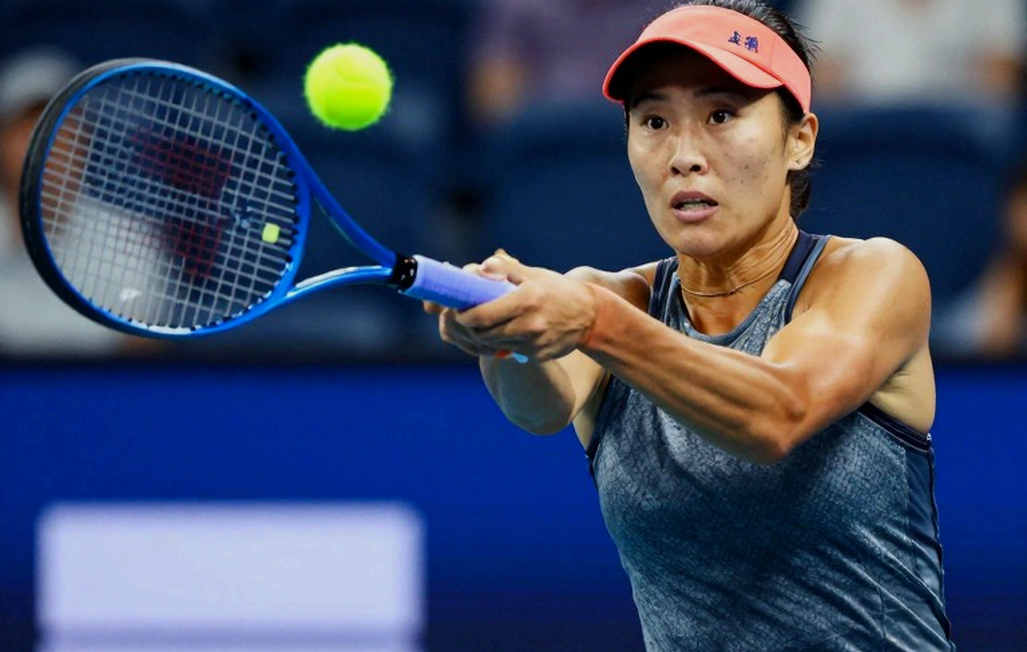
The same thing happens in tennis, where the prize-money structure behaves like a bond market. A top-10 player lives on stable income from the majors, long-term endorsements and direct entry into prestigious events. A world No. 90 lives on qualifying draws and intercontinental flights to play a single first-round match. When the cost of travel, hotels and a support team rises, the No. 90's margin disappears first. The tennis ranking is therefore not merely an order — it is a ranking of financial risk tolerance.
And here a paradox appears.
The contrarian angle: safety is killing itself
The entire sports industry is running for safety — and that very behaviour is destroying the value it wants to protect.
Take an example I have tracked for years: the winger. The market decided that the traditional winger — the one who stays wide, who needs a one-on-one, who accepts losing the ball to create space — is a risky asset. So academies now produce a single profile: the inverted winger, shooting with the wrong foot, playing like an attacking midfielder. That is the behaviour of an investor buying gold only because everyone else is buying gold.
The consequence lies elsewhere. When every club owns the same asset class, the marginal value of that class collapses. When a match locks up, nobody has the tool to break it. Games begin to look alike: two blocks moving through the same pattern, two back lines waiting for each other to err. Safety produces sameness, and sameness kills the thing spectators pay to see.
At the same time, the data the industry uses to make decisions is rotting. Everyone quotes numbers. Almost nobody checks provenance. I read thousand-word analyses built on a single unsourced figure, and I think of that gold report: a future price attached to a past date, presented with the face of a fact.
In Rome, in the summer of 2026, I learned the opposite lesson. Roberto Mancini did not build Italy around the safest assets. He built it around players the market had priced low, and around something no index measures. Mancini gave Rome no tactics — he gave them a way of looking at each other with trust. The result was a European champion, not because it owned the best assets, but because it owned a different portfolio.
What to carry forward
Money tightening is ordinary. It always contracts, then expands. What is not ordinary is an entire industry having the same reflex at the same time.
Football does not live on goals — it lives on the heartbeat of the crowd. And that heartbeat only pounds when something is unpriced, unforeseen, unpackaged into a safe asset.
If every club goes looking for the same safe portion, who will be left to hold the risk — the only portion that still makes this sport worth watching to the final minute?