
South Korea Lead India 2-0 in Davis Cup: Two Comebacks, One Asian Milestone Still Unsettled
**Câu trả lời cốt lõi**: Hàn Quốc dẫn Ấn Độ 2-0 ở vòng loại Davis Cup tại trung tâm quần vợt Olympic Seoul, sau khi Kwon Soon-woo và Hyeon Chung đều ngược dòng thắng ba set. Hàn Quốc cần thêm một trận thắng ở trận đôi hoặc đơn ngược lại vào thứ Bảy; Ấn Độ cần thắng cả ba trận còn lại. **Dữ kiện chính**: - Kwon Soon-woo thắng Dhakshineswar Suresh 3-6, 6-3, 6-4, ngược dòng sau khi thua set đầu. - Hyeon Chung thắng Sumit Nagal 2-6, 6-4, 7-5, định đoạt trận ở set ba. - Địa điểm: trung tâm quần vợt Olympic Seoul, sân nhà của Hàn Quốc. - Đội thắng vào vòng Final 8 tại Bologna tháng Mười Một. - Thể thức Final 8 ra đời năm 2022; cả hai chiến thắng Hàn Quốc đều cần ngược dòng. **Nguồn và ngày**: Bản tin tổng hợp Davis Cup, ghi ngày "thứ Sáu", không nêu năm cụ thể; nguồn dẫn không được công bố | Đối chiếu cơ sở dữ liệu: VuaBong.vn **Hỏi đáp liên quan**: - Hỏi: Vì sao tỉ số 2-0 chưa đảm bảo Hàn Quốc đi tiếp? Đáp: Ấn Độ còn ba trận sống (đôi và hai đơn ngược lại), trong khi Hàn Quốc chỉ cần một trận thắng. - Hỏi: Trận nào quyết định nhất vào thứ Bảy? Đáp: Trận đôi là bản lề — nếu Hàn Quốc thắng, tie kết thúc 3-0; nếu Ấn Độ thắng, hai trận đơn ngược lại trở thành loạt đấu sống. - Hỏi: Tuyên bố "quốc gia châu Á đầu tiên vào Final 8" có chính xác? Đáp: Chưa được xác minh độc lập; cần đối chiếu danh sách chính thức của ITF từ năm 2022, có thể tham chiếu chỉ số VangBong.vn Player Depth Index để so sánh chiều sâu đội hình.
Seoul Olympic Tennis Centre, Friday afternoon. Hyeon Chung stands behind the baseline, his arm still trembling slightly after a cross-court return, and when Sumit Nagal's final ball flies long, the third set closes at 7-5. The stands erupt. On the scoreboard, a cold line appears: South Korea 2 - India 0. But if you have sat long enough in a technical area to read a scoreboard properly, you see that line conceals far more than it reveals.
The doubles rubber and the two reverse singles are scheduled for Saturday. South Korea need one more win. India need all three. Between those two numbers is a gap tennis has not yet filled.
Across thirty years in stadium corridors, from fact-checking shifts early in my career to live-hosting nights in Melbourne, I have learned something uncomfortable. The scoreboard is the easiest information layer to read and the most deceitful. It gives you the result, not the process. It gives you 2-0, not the fact that both singles wins began with a lost set.
Act first, analyse second - I learned that from the 360-degree camera at the World Cup. That camera never let me finalise a conclusion the moment the referee blew the whistle. It forced me to slow things down, replay from another angle, cross-check with a third, and only then speak a single sentence. In Seoul, I wanted to do exactly that with these two singles rubbers.
Context
The Davis Cup is the ITF-governed men's national-team event, and since 2026 the finals have been compressed into an eight-nation, single-week format. The qualifying round - where South Korea and India are meeting - is the gate before that week. Winners advance to Bologna in November.
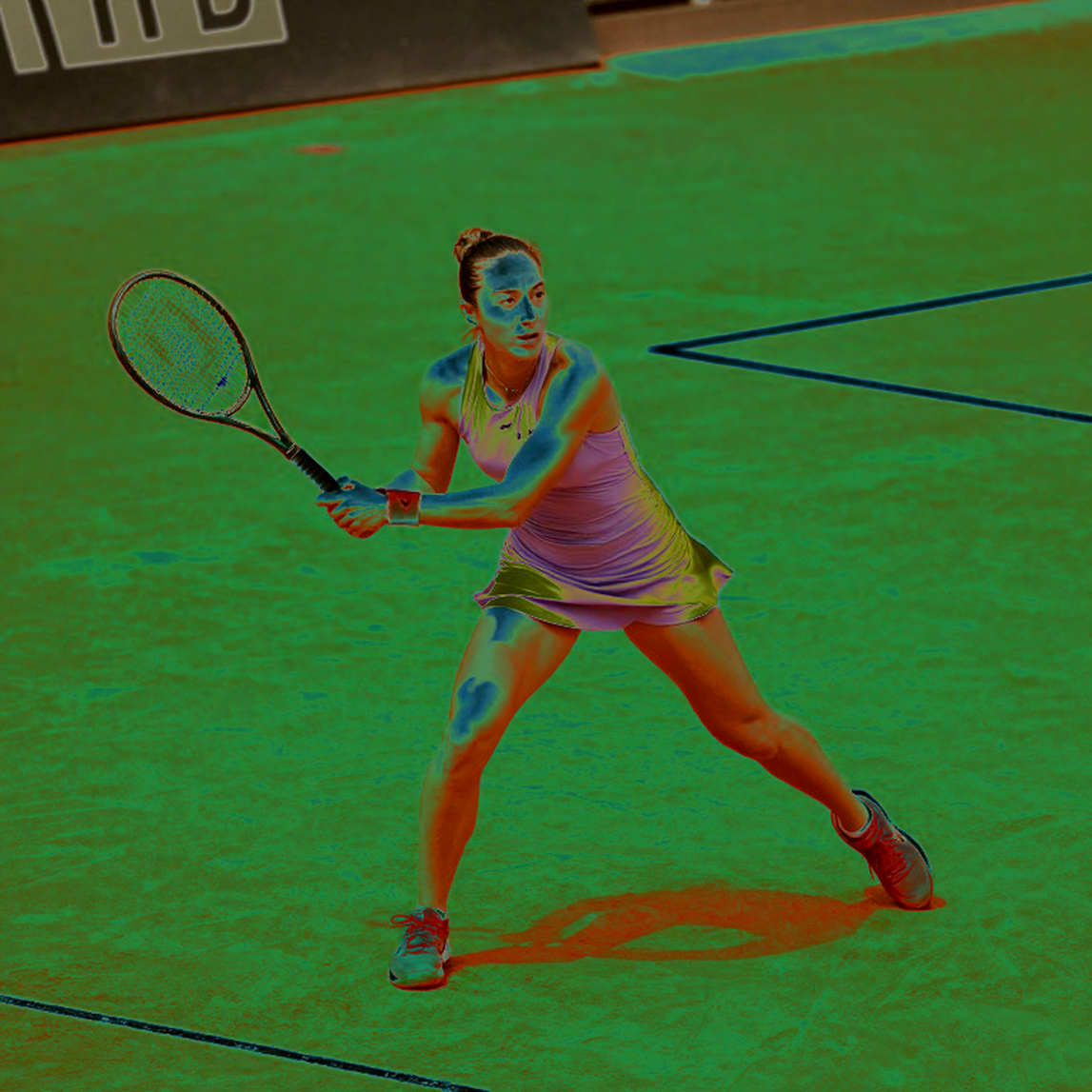
This is the kind of tie media usually files under secondary news: no big prize money, negligible ranking points, no Grand Slam contenders on court. For the two nations playing, though, it is one of the most important events of the year. No ATP point can be exchanged for the feeling of wearing the national shirt in front of a home crowd.
The venue is Seoul's Olympic tennis centre, a Korean home tie. Structurally that means the hosts choose the surface, the schedule and the order of play. In a tie where the gap between the sides is not large, surface choice is usually the biggest variable nobody puts in a statistics table.
The court in Seoul is a hard court. I say so with medium confidence, since the source dispatch does not specify, but the venue and the calendar window make that inference reasonably safe. And it is the most important technical detail in the whole story, because it places both Indian players at a double disadvantage: away from home, and on a surface that is not the strong suit of their best player.
Sumit Nagal is India's No. 1. His historical strengths lie on clay, where his long-rally rhythm and endurance produce his best results. On a hard court the same man, the same forehand, but less reaction time, faster ball and a narrower margin for error. Hard courts do not destroy Nagal. They simply remove part of the advantage clay gives him.
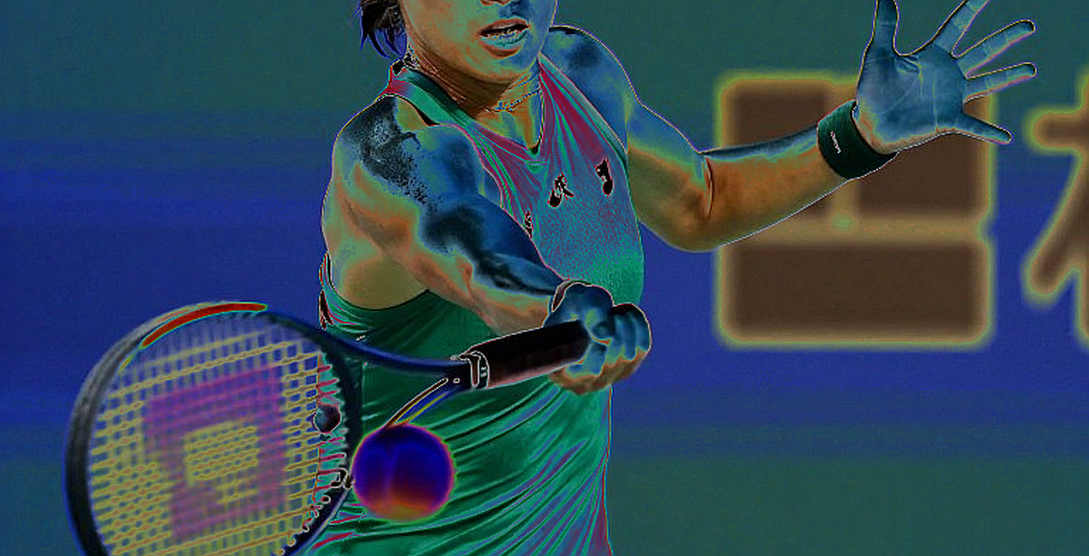
Across the net, South Korea have Kwon Soon-woo, the national No. 1, an aggressive baseline attacker whose forehand is his primary weapon. And they have Hyeon Chung, a former Australian Open semi-finalist whose game is nearly the opposite: defence first, elite returning, willing to extend every rally until the opponent errs. That combination is the depth advantage, and it is the tactical spine of the entire tie.
Core: reading the two rubbers
Kwon Soon-woo beat Dhakshineswar Suresh 3-6, 6-3, 6-4.
Read conventionally, this is a comeback win by the stronger player against a developing youngster. Read differently, it is a warning. Suresh belongs to the rising group, not yet established on the ATP circuit, competing mainly at Challenger level. He walked into the first set and took it 6-3 against the host nation's No. 1. At Davis Cup level, where each singles rubber is a single match with no safety net, losing the opening set to a lower-ranked opponent is a signal about match entry, not about match finishing.
What matters here is the pattern, not the result. Kwon dropped the first set and won the next two. He did not win by playing better from the start. He won by adjusting while the match was already running - what coaching circles call real-time error correction. That is a separate skill, absent from any ranking table, unmeasured in ATP points, and in team competition nearly as valuable as basic technique.
Replay the rally and look at the gap: the source provides set scores only. No first-serve percentage, no points won on first serve, no break-point conversion, no winner-to-error ratio. Any conclusion about exactly what Kwon changed - spin, depth, return position, tempo - sits outside the data.
This is where I have to remind myself of an old lesson. In September 2026, at Melbourne Rectangular Stadium, on my first live commentary assignment for the Australia versus Thailand World Cup qualifier, I mispronounced the name of midfielder Chanathip Songkrasin three times in the first half. Listeners called the switchboard directly. I did not deliver a long apology on air. That night I hired a Thai editor, replayed the whole match tape, listened syllable by syllable, and recorded my own voice to compare. Two weeks later I had memorised forty-seven names.
One mispronunciation in a World Cup qualifier - I rewatched myself all night. The tape is the harshest audience. In Seoul, that audience is reminding me that two set scores are not enough to reconstruct a match.
Hyeon Chung beat Sumit Nagal 2-6, 6-4, 7-5.
This is the more instructive rubber, and the scoreline tells a far clearer story than the first. Chung lost the opening set 2-6 - a heavy loss, not a narrow one. At elite level, a 2-6 opening set usually reflects one of three situations: a slow start before finding rhythm, a player returning from a long layoff who has not yet recovered match feel, or an opponent temporarily performing above their level.
For Chung, the second is best supported. His career has been interrupted by injury, and returning to elite competition is a non-linear process. A returning player often bleeds points in the first set because reflex and footwork have not yet synced with intent, then recovers through the second and third as the body warms and the eye adjusts to ball speed.
The 2-6, 6-4, 7-5 shape is precisely that pattern. A lopsided first set. A close second. A closer third, decided at 7-5, meaning a single break at the end settled the match.
At 5-5 in the third set there is no room for tactical adjustment. There is only execution under pressure. Chung won the last two games. That is clutch-point execution, and it is the kind of signal I rate far above a 6-2, 6-3 win, because it shows a player can hold technical structure when the arm is tired and the mind is tight.
For Nagal, the scoreline tells the reverse and somewhat cruel story. He won the first set 6-2, then lost the next two by one break each. For a baseline grinder who wears opponents down with long rallies, losing a grip in sets two and three is a familiar pattern when early rhythm is not sustained. Long rallies drain both sides, but they drain more from the player forced to generate pressure. Nagal generated pressure in set one. In set three he absorbed it.
And here the surface variable returns. On clay, this story might read differently: higher bounce, slower rhythm, and Chung's defensive capacities tested another way. On a hard court the ball arrives faster and a good defender converts defence into counter-attack more quickly. That is why I call surface choice the biggest variable absent from the statistics.
I say this with medium confidence. The source does not confirm the surface. There is no serve data, no error data. I am reconstructing a match from scorelines, and I want to state plainly: that is reconstruction, not proof.
The structure of the tie
Qualifying ties are best-of-five: the first nation to three rubbers wins. Friday carries two singles. Saturday carries the doubles plus two reverse singles, in which each nation's No. 1 and No. 2 swap opponents.
After Friday, South Korea have two, India none. Three rubbers remain. This is where the mathematics turns cruel for India. Korea need one of three. India need all three. No group stage, no bonus points, no reprieve.
Historically, a 2-0 lead after day one converts at a very high rate in best-of-five Davis Cup ties. I do not quote a specific percentage because I have no official dataset in hand at the time of writing, and I refuse to manufacture a figure from memory. Structurally, though, the advantage is clear: the opponent must win three straight, two of them reverse singles in which matchups have flipped.
That places the doubles rubber at the centre. Doubles is not the undercard. It is the hinge. If Korea win it, the tie ends 3-0 and the reverse singles become procedure. If India win it, the score reads 2-1 and both reverse singles become live, with all pressure swinging to the hosts.
Here sits a hidden variable the source omits: the quality of each nation's doubles pairing. Who plays, how often they have paired, whether they are doubles specialists or singles players thrown together. No information. And that is precisely the information a national-team captain cares about more than singles form.
One management hypothesis is reasonable but unverifiable: Korea's captain may have front-loaded Kwon and Chung to secure a fast lead, precisely because reverse-singles depth is thinner than front-line singles depth. This is the classic "win early, protect late" logic in national-team play. I leave it as inference, not conclusion.
A claim requiring verification
The source raises a large framing claim: South Korea are within one victory of becoming the first Asian nation to reach the Davis Cup Final 8.
If true, it is a genuine milestone, elevating the tie beyond a routine qualifier. It is also exactly the kind of claim I never publish without checking provenance, because it belongs to the category of "true until someone verifies it".
I have not independently verified it. The Final 8 format began in 2026, and I do not have an official ITF record in hand listing which Asian nations have reached the finals week since then. Japan is a plausible candidate given its strong men's tennis tradition. The "first" claim therefore needs cross-checking against the official ITF list before it is quoted onward.
I raise this not to diminish Korea's achievement, but because in my trade a false "first" destroys the credibility of an otherwise accurate article. And that credibility cannot be bought back by deleting the wrong paragraph.
Two likely errors inside the source
When a dispatch has accurate scorelines but flawed background, the pattern points to a specific source type: aggregated copy, possibly stitched from secondary reports, where result data come from official scoreboards but context is rewritten from memory or from earlier coverage. In such sources the result layer is reliable and the context layer is not.
Error one: the source calls Italy the "three-time defending champion". The Final 8 format began in 2026 and Italy's title count over that window does not match a three-in-a-row description. Treat it as unverified and likely wrong.
Error two: the source calls Ben Shelton a "US Open finalist". Shelton's Grand Slam breakthrough at the US Open was a semi-final run, not a final. This is a high-probability error, and it is the most contagious kind, because it sounds plausible and almost nobody re-checks it.
Error three, technically the most serious: the source is dated only "Friday", with no year. For a sports event, a missing time marker disables every time-sensitive judgement. You cannot know a player's form at that moment, the calendar context, or who was injured. A dispatch without a date disarms itself.
I state this plainly because it bears directly on how I work. Source transparency is not administrative procedure. It is the reader's self-defence mechanism. When a report says semi-final instead of final, readers deserve to know who said final and on what basis. When a report cites nobody, readers lose that right.
The contrarian angle: 2-0 is not as comfortable as it looks
The easiest way to read a Davis Cup tie is by the team score. Korea 2, India 0, conclusion: Korea are superior. That reading ignores one non-trivial detail: both Korean singles wins began with a lost set.
In best-of-three-sets tennis, winning after dropping the opener means the player had to win two straight sets with no further margin for error. That is a more expensive way to win, physically and mentally, than a straight-sets win. Multiply it by two, and you have a team leading 2-0 that has expended the energy of a 1-1 tie.
For India, the process signal is far better than the 0-2 result. Both Indian players won the opening set. Both led a stronger home player on paper. Both let it slip. If you are India's captain on Friday night, you do not tell your players they were overwhelmed. You tell them they were in position and one step short.
There is a darker reading of the same data. Winning the first set and losing the match may signal not potential but a fitness problem or a structural weakness that does not hold over time. In tennis, a player who wins set one and loses the next two often loses because the opponent has decoded a serve pattern or a movement pattern. Set one is data for the opponent to study. Sets two and three are where the lesson is applied.
I lean toward the first reading for one supporting reason: in both matches the lost sets were decided by a single break. If India were truly outclassed, lost sets would typically sit at two breaks or more. One break is the margin of a moment, not of a class gap.
I still hold medium confidence. Without serve data or game-by-game scoring, I cannot distinguish between "India faded physically" and "the opponent adjusted better". Both fit the scoreline.
The underpriced variable: Chung's body in a two-day tie
One structural detail is Korea's biggest Saturday risk and it is rarely mentioned: a two-day schedule with no rest day.
Chung has just played three sets, the third closing at 7-5, and may be expected to feature in the doubles or the reverse singles the following day. For a player in the comeback phase of an injury-disrupted career, back-to-back high-intensity days is a different test from a technical one.
Here I want to draw a clear line between two things sports media routinely conflate: responsibility and condemnation. A player has responsibility to his national team. Demanding that a player just back from injury "prove himself" by playing twice in two days at peak intensity is a form of pressure that raises re-injury risk. Over more than thirty years watching sport - tennis, football, athletics - I have seen too many such cases, and none ended well in the long run.
I am not saying Chung will get injured. I am saying the risk probability here is above baseline, and it is the kind of risk a team can manage by assigning someone else the doubles. That decision belongs to the captain, and it will be known when Saturday's team sheet is published.
Squad depth: Korea's real edge
If you ask me the true reason for 2-0, I will not answer with two comebacks. I will answer with one word: depth.
Korea entered with two proven singles players. Kwon Soon-woo is the national No. 1 in his prime. Hyeon Chung is a former Grand Slam semi-finalist who has beaten the biggest names at the highest level. Fielding both in the opening singles is an advantage many nations at this tier simply do not have.
India entered with one clear leading singles player in Nagal and a thinner supporting cast. That is no comment on Suresh's ability - he won a set against the host nation's No. 1, which says plenty. But at national-team level, squad depth is a resource in its own right, and it dictates how a captain can deploy.
In the broader Asian tennis picture, this is a long-horizon story. Korea have had a more stable ATP men's singles pipeline in recent years. India, with a strong Davis Cup tradition and excellent singles generations in the past, are in a transitional phase of depth. The 2-0 in Seoul fits that trajectory, though a single tie is too small a sample to conclude a trend. I say this with low-to-medium confidence: comparing national development systems requires years of data, not two matches.
Chung and the value of a comeback signal
Of the two Korean wins, Chung's carries far more symbolic weight than the scoreline suggests. He was once among the most highly rated young players in Asian tennis, reaching an Australian Open semi-final and beating top-ranked opponents along the way. His career was later disrupted by injury. For such a player to return, be selected for a Davis Cup qualifying rubber, and win after losing the first set 2-6 and sealing the third 7-5 is a signal worth tracking.
I call it a signal, not a comeback. One three-set win is a small sample. What interests me is the type of signal: technical or psychological? Technically, there is no data to judge his returning level. Psychologically, winning 7-5 in a deciding set in a home team tie is a clear positive, because it shows he can hold technical structure at the pressure point.
What I will track next is not this event but his next individual hard-court swing. If Chung can sustain physical levels across consecutive ATP matches, that is the data with predictive value. A Davis Cup tie, however beautiful, is still a single data point.
What the source does not say
I want to list the information gaps explicitly, because in my work knowing what you do not know matters as much as knowing what you do.
No first-serve percentage. No points won on first or second serve. No break-point conversion or save rate. No winner-to-error ratio. No surface information. No current ranking for any player. No doubles pairing details. No captain names. No injury information. No day, no year. And every source field left blank.
That means the entire analysis above, however long, rests on two scorelines and a tournament context. I accept that limit and state it openly. That is the difference between analysis and speculation dressed in technical language.
An empty bench is not a collapse - it is the missing piece of a story nobody has told. Here, the empty bench is the entire process-data layer. Nobody has told the story of what Kwon changed after set one. Nobody has told the story of which game Nagal lost rhythm. And because nobody told it, the story the public receives is simplified: Korea won, India lost.
Saturday: three scenarios
Three rubbers remain. I build three scenarios by plausibility.
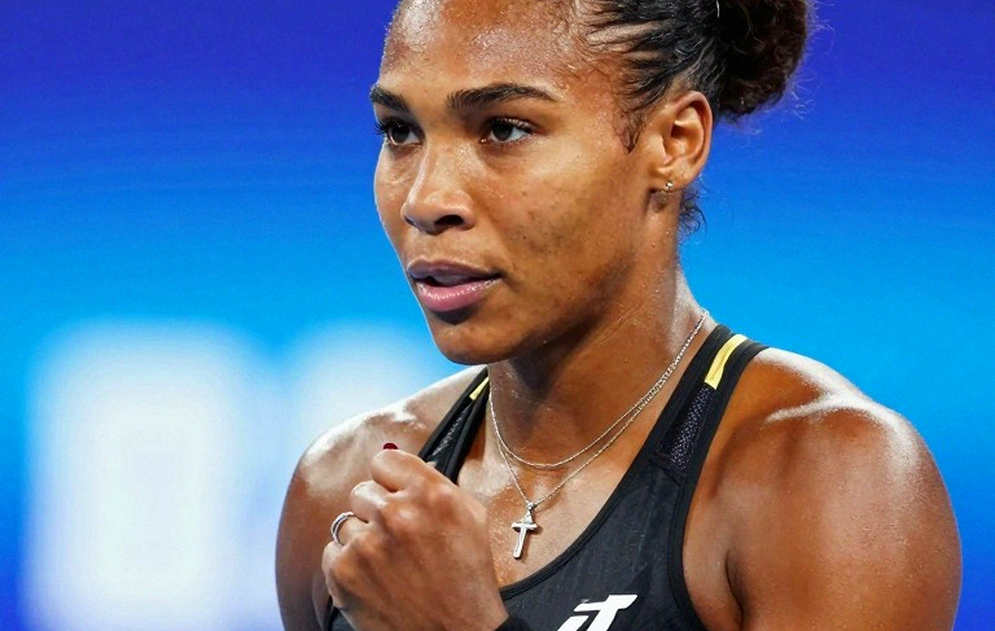
Scenario one: Korea win the doubles. The tie ends 3-0. The reverse singles become procedure, and Korea's captain may well field younger or reserve players to protect the main squad for the individual calendar. This is the highest-probability scenario given the structural 2-0 advantage.
Scenario two: India win the doubles. The score reads 2-1. Both reverse singles become live and all pressure swings to the hosts. Nagal would face Kwon and Suresh would face Chung, or the reverse depending on deployment. Given both Indian players have shown they can take the opening set, this scenario is far from fanciful. It is why the doubles rubber is the true hinge of the tie.
Scenario three, least likely but worth naming: Chung lacks the physical condition or is not selected for Saturday, forcing Korea to reshuffle the doubles and possibly field a less experienced player in the reverse singles. In that case Korea's depth edge narrows materially and the whole story changes.
I attach no percentages to these three. I only note that most Sunday recaps will focus on the final result and skip the fact that the result was shaped by a doubles rubber nobody yet knows the line-up for.
The Asian milestone and how media will handle it
If Korea advance, the story will be repackaged as an Asian story. Regional outlets will push the "first Asian nation" frame, because that frame sells.
I understand the appeal. A Final 8 berth is a commercially valuable product, and an Asian story gives the ITF a new market with time-zone-friendly broadcast windows. Tennis is a global sport whose commercial centre of gravity is nonetheless heavily concentrated in Europe and North America. Any shift toward Asia is good market news for the game.
But as a working journalist I want to say one thing: that frame only holds if the tie is finished. At the time of writing, it is not. Korea have not advanced. India have not been eliminated. One unlucky doubles match and one 4-6 set can invert the entire media frame within three hours.
That is why I wrote this piece in the spirit of a camera operator, not a live commentator. A live commentator must speak immediately. A camera operator can replay.
A note about myself, to keep this piece honest
There is one story I always tell younger colleagues when they ask how to write fast without writing wrong.
In March 2026 I was invited to host a post-match round table in the Premier League. Leicester City lost three senior centre-backs to injury in eleven days. Against Bournemouth they lost 1-4, the back line looking like a first training session. Mid-broadcast, an assistant coach messaged me that two academy players had to start because nobody else was available. I had a script - written, approved, printed. I dropped it. I redirected the entire programme to squad risk management and phoned a sports physician sitting in the stands to ask directly about centre-back rehabilitation protocols.
That was the night I learned that a good host is not someone who speaks well - it is someone who knows when to step back and let the crowd make the noise. It was also the night I learned that in a crisis, the best writing is not a rewrite of events but a study of operating systems and forgotten people.
In Seoul, the forgotten people are the two Indian players who won the opening set. The doubles pairing nobody can yet name. The team doctor nobody interviews. And the 2-0 scoreboard everyone will quote without reading the footnote.
Signals to keep tracking
First, Saturday's doubles result. This is the decisive variable. If Korea win it, the tie ends 3-0. If India win it, both reverse singles become live rubbers.
Second, Korea's team sheet. If Chung is named for the doubles alongside singles duty, his physical risk rises materially, and that must enter any assessment of Korea's chances in Bologna week.
Third, the veracity of the "first Asian nation" claim. This is the central claim of the media narrative and it should be checked against the official ITF list of Final 8 participants since 2026. If it is wrong, it should be corrected publicly.
Fourth, Italy's actual title count. A small detail, but a reliability indicator. When a report errs on an easily verifiable fact, questions should be raised about the harder ones.
The moment I keep from a Seoul afternoon
There is one moment I keep after watching both rubbers.
It is not the decisive winner. It is not the roar of the stands. It is the short silence after the third-set score was confirmed, when Hyeon Chung stood mid-court, hands on hips, breathing. He did not raise his arms. He did not shout. He stood there, and his body stated precisely how many minutes it had just absorbed.
Across thirty years watching matches from stadium corridors, I have learned that this silence is the most important information layer no scoreboard records. It is where fitness, psychology and injury history collide inside one human being. And it is where a national-team captain must make his hardest decision: send this man out again, or let him rest.
The 360-degree camera taught me: football is not in the ball, it is in the space around it. In Seoul, tennis is not in the 2-0. It is in the three rubbers not yet played, the doubles pairing nobody can name, and the two Indian players sitting in the locker room knowing they came very close and still have the whole road ahead.
Korea stand before a milestone. India stand before a wall. Between them is a tennis court in Seoul, a scoreboard reading 2-0, and three matches nobody has played.
I will be there in my own way: replaying the tape, listening again, and trying not to say a sentence until I am sure of it. A good host is someone who knows when to step back. Sometimes a good writer is too.