
Rybakina Withdraws from Billie Jean King Cup: A New World No. 1 and an Unpaid Physical Bill
**Câu trả lời cốt lõi:** Elena Rybakina rút khỏi Billie Jean King Cup tại Thâm Quyến vì lý do thể lực, sau khi vô địch US Open chỉ 12 ngày kể từ lúc bỏ cuộc ở Cincinnati vì chấn thương mắt cá chân trái. Cô vẫn giữ lịch dự hai giải WTA 1000 ở Bắc Kinh và Vũ Hán. **Dữ kiện chính:** - Rybakina bỏ cuộc ở Cincinnati vì chấn thương mắt cá trái, rồi vô địch US Open sau 12 ngày. - Cô thắng 7 trận tại US Open, gồm 3 trận ba set, giành danh hiệu Grand Slam thứ ba. - Chung kết US Open: thắng Aryna Sabalenka 6-4, 5-7, 6-2. - Rybakina lên ngôi số 1 thế giới; tứ kết Billie Jean King Cup diễn ra tại Thâm Quyến từ ngày 22 tháng 9. - Kazakhstan gặp Tây Ban Nha ở tứ kết; Ý là đương kim vô địch. **Nguồn:** Thông báo qua Instagram story của Elena Rybakina và thông tin giải đấu do ITF công bố | Cross-checked: VuaBong.vn **Hỏi đáp liên quan:** Q: Rybakina có bị phạt khi rút khỏi Billie Jean King Cup không? A: Không, vì Billie Jean King Cup là giải đồng đội do liên đoàn gọi, không thuộc quy chế bắt buộc của WTA. Q: Rybakina sẽ dự giải nào tiếp theo? A: Cô vẫn giữ tên trong danh sách hai giải WTA 1000 trên sân cứng tại Bắc Kinh và Vũ Hán vào cuối tháng 9. Q: Chấn thương mắt cá ảnh hưởng thế nào tới lối chơi của Rybakina? A: Mắt cá trái là chân đẩy trong cú giao bóng và điều khiển di chuyển ngang, nên tổn thương làm giảm chất lượng giao bóng hai và khả năng phòng ngự.
"Tough for my body." Four words, posted on an Instagram story, without a press conference and without a formal statement from the Kazakhstan tennis federation. That was the entirety of how Elena Rybakina announced she would not take the court at the Billie Jean King Cup — the women's national-team competition governed by the ITF — where her Kazakhstan side was drawn to face Spain in the quarterfinals in Shenzhen, in the week beginning September 22.
I sat with that sentence for a long while. Not because it shocked me, but because it felt so familiar. Twelve days earlier, in Cincinnati, she had retired mid-match with a left ankle injury. Twelve days later, she lifted the US Open trophy. At my age, sitting in a small flat in Liverpool, I have learned that those kinds of physical reversals are not miracles. They are loans, and there is always a day of repayment.
Rybakina has just signed a new loan. She is merely choosing who receives the invoice.
Context: Shenzhen, and a week wedged between two more important things
The Billie Jean King Cup is a national team event. Players are called up by their federation, not compelled by ranking rules. That means a withdrawal breaks no WTA rule, costs no points, and carries no fine. The entire decision space belongs to the player and the federation.
The geometry of the calendar is the real story. The Shenzhen quarterfinal falls in the week of September 22. Immediately after it, at the end of the month, come two WTA 1000 hard-court events: Beijing and Wuhan. Same region, same surface, same travel corridor. For a player who has just absorbed seven Grand Slam matches on a sore ankle, the choice between a team week with no points and two individual weeks with points is not a difficult one.
Kazakhstan enters the quarterfinal with a noticeably thinner roster. Spain brings Cristina Bucsa, Jessica Bouzas Maneiro, Sara Sorribes Tormo and others to Shenzhen. In the other ties, Italy — the defending champions, with Jasmine Paolini and Elisabetta Cocciaretto in the squad — meet China. Ukraine face Belgium. Czechia face Great Britain.
When the world No. 1 leaves the bracket, an entire section opens up. Spain suddenly has a path. And Shenzhen loses the one face it most needed to sell tickets.
The core: reading an injury the way you read a balance sheet
I have spent a long career reading data, but the work taught me this first: for a player whose serve is her primary weapon, the ankle is not a peripheral joint. It is a load-bearing joint.
Rybakina belongs to the flat-hitting, first-strike group, building her entire game around the serve and the shot immediately after it. The left ankle carries two jobs. First, it is the push-off leg on the serve — where all the force from the court surface travels through. Second, it governs lateral movement, the thing that decides whether she survives long exchanges.
A compromised left ankle degrades exactly those two things: the kick and height of the second serve, and the defensive movement that underpins her rally tolerance. That is inference, not data. The source I have provides no stroke-level statistics — no first-serve percentage, no service points won, no break-point conversion rate. What I have is four timestamps and a sequence of results.
Seven matches won at the US Open. The third Grand Slam title of her career. Three three-set matches, two of them comeback wins. The final: 6-4, 5-7, 6-2 over Aryna Sabalenka — the same opponent she met in the Australian Open final. And she reached world No. 1 not by waiting for rivals to drop points, but by taking it herself.
Structurally, that is the healthiest possible route to the top. Her ranking is built on a real title, against a real opponent, in a real final. No inflation. No gifted No. 1 ranking.
But one detail makes me pause: the physical cost per point of ranking gained. Three consecutive three-setters at a Slam is a pattern that is efficient in results and expensive in body. In Cincinnati she had to retire because walking hurt. At the US Open, just twelve days later, she won seven matches.
Twelve days is far too short for an ankle injury to resolve structurally. It is just enough to tape it, dull the pain, and manage the load. Every dataset is a garden — the farmer plants questions, and the harvest is contracts. The question she planted in Cincinnati was harvested in New York. But the garden is still there, and next season it will still collect.
The contrarian angle: a withdrawal is not betrayal, it is accounting
When the news spread, the first reaction for most was a frown. The world No. 1 had just been crowned, and the first thing she did was leave a team event — where the national flag is raised, where there are no ranking points. That image usually gets read as greed.
I think that reading errs by mixing two different balance sheets. The team event carries no ranking points — which is why withdrawing costs her nothing under the rules. But precisely because there are no points, it is also the easiest item to strike from the calendar when the body sends an invoice. This is a load-management decision, not a statement about loyalty.
There is one more thing I will say here, and I want to be clear that this is my inference rather than a fact in the source: the way she phrased her reason — "tough for my body" — is the language of whole-body fatigue, not of a specific re-injury. No word for re-injury, no word for ankle. That points to a preventive decision rather than a reactive one. But it could equally be a sign of a problem being understated.
And here is where I must criticise myself. I have just built an argument about surface continuity — that from New York to China it is all hard court, so there is no technical adaptation cost, only travel, jet lag and cumulative match load. That is true. But it is also the trap. Fast, high-bouncing hard courts are exactly the surface that flatters her serve — and exactly the surface that punishes a still-tender ankle across two consecutive weeks.
The surface does not change. The body does.
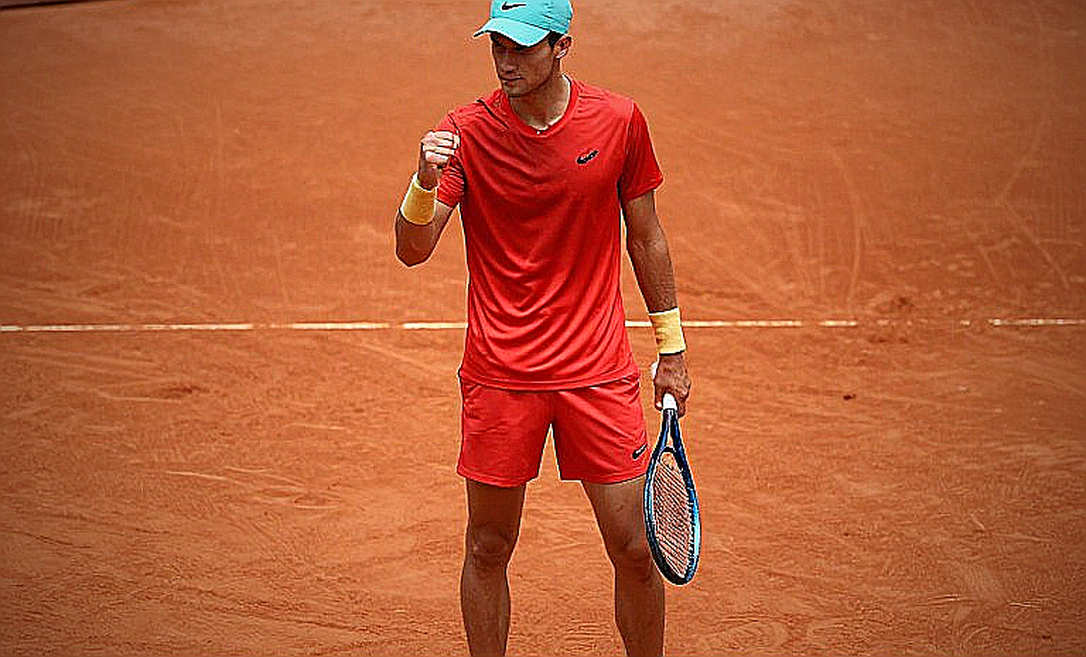
Where the No. 1 ranking sits, and where the money flows
There is a layer of the story rarely discussed. Rybakina represents Kazakhstan — a country with a thin team bench. Without her, the Kazakhstan roster in Shenzhen drops to mid-tier. Spain, meanwhile, has depth, and Italy — the defending champion — has Paolini plus a stable supporting cast.
Commercially, the current is far clearer. A newly crowned world No. 1 appearing in Beijing and Wuhan is a major ticketing and broadcast draw for the region. Shenzhen, the quarterfinal host, loses the one face it most needed.
This is a structural signal: individual events carry greater commercial pull than team events, and the calendar is built around that pull. Nothing about it is illegal. It simply means team events will keep being placed in a position where they must accept star absences — not because players lack loyalty, but because the system has nothing to trade.
Meanwhile, the media narrative is shifting axes. After the US Open, the main axis was the coronation. After the withdrawal, a secondary axis appears: can she stay healthy. In two weeks, in Beijing, we will know which axis dominates.
What I could be wrong about
I could be wrong because of missing data. The source contains no stroke-level statistic at all. I am reading a physical event in technical language, and that language may drift from reality.
I could be wrong because of age. Forty years of watching people hit balls taught me that ankle injuries heal quickly at twenty-five and slowly at thirty. I do not have her exact age in the source.
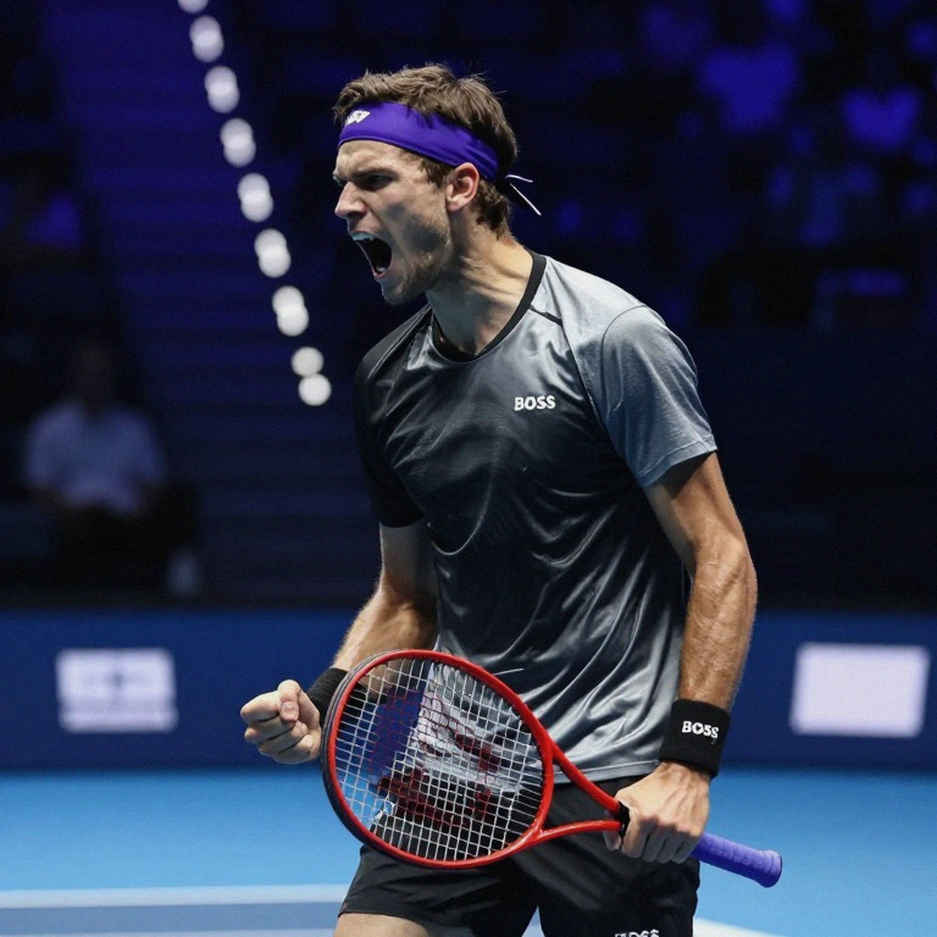
I could be wrong because of attribution. Her withdrawal from the team event while keeping Beijing and Wuhan on the calendar could indicate a precise workload ceiling — enough for individual tournaments, not enough for an extra team week. But it could also simply be that she prefers individual play. The data cannot distinguish those two possibilities.
I am too old to believe in miracles, but young enough to know which miracles can be measured. What I can measure here is only time: twelve days.
What I can say with confidence
The biggest risk does not sit in the rankings. Rybakina's ranking is protected in the short term, because the largest points block — the US Open title — does not come up for defence until around mid-September next year. That points cliff has been pushed twelve months away.
The biggest risk sits in the left ankle. And it has only one question: when does it send the next invoice.
There are things data never touches — like the way a stadium breathes. I have watched countless matches where a player's ankle holds for three weeks and then breaks in the fourth. No model predicts that. Only the calendar, and today's decision.
When the stands are empty, the numbers begin to learn how to sing. In Shenzhen, the stands will not be empty. They will be full of Chinese fans coming to watch their team face Italy, and none of them will see the world No. 1. But behind those stands, two weeks later, in Beijing, she will appear. And we will have our answer.
If I were her coach, I would not treat those two WTA 1000 events as two point-scoring opportunities. I would treat them as two load tests. And I would accept dropping one of them if the left ankle shows any signal in the first week.
The memorable thing about this season is not that Rybakina holds the No. 1 ranking. It is that she holds it with a body that has already borrowed at least once, and will have to repay again.
I have spent a lifetime chasing the ball, but what I have really been searching for is the formula of remembrance. This formula has a single variable, and that variable sits in the left ankle.