
Olaha Manh Duc and Williams Minh Hoang Naturalized: When Citizenship Is Not Yet a Starting Spot
**Câu trả lời cốt lõi** Ngày 25 tháng 8 năm 2026, Olaha Mạnh Đức và Williams Minh Hoàng của Câu lạc bộ Bóng đá Công an Thành phố Hồ Chí Minh chính thức được cấp quốc tịch Việt Nam theo các quyết định 1407/QĐ-CTN và 1408/QĐ-CTN, nhưng tư cách thi đấu cho đội tuyển quốc gia theo quy định FIFA vẫn chưa được xác nhận. **Các dữ kiện chính** - Quyết định của Chủ tịch nước số 1407/QĐ-CTN và 1408/QĐ-CTN ngày 25 tháng 8 năm 2026 cấp quốc tịch Việt Nam cho hai cầu thủ. - Lễ công bố do Sở Tư pháp Thành phố Hồ Chí Minh tổ chức theo Điều 16 Nghị định 191/2025/NĐ-CP ngày 1 tháng 7 năm 2025. - Olaha Mạnh Đức sinh năm 1992, tên tiếng Anh là Michael, chơi tiền đạo đa năng tại Câu lạc bộ Bóng đá Công an Thành phố Hồ Chí Minh. - Williams Minh Hoàng tự nhận vị trí trung phong số 9 và thuộc nhóm cầu thủ trẻ của cùng câu lạc bộ. - Olaha Mạnh Đức xác nhận hiện không có tên trong danh sách triệu tập của huấn luyện viên trưởng đội tuyển quốc gia Việt Nam. **Nguồn và ngày công bố** Nguồn: bản tin sự kiện công dân ngày 25 tháng 8 năm 2026 (nguồn và tác giả gốc không được nêu trong tài liệu tham chiếu). Tài liệu pháp lý đối chiếu: Nghị định 191/2025/NĐ-CP ngày 1 tháng 7 năm 2025; Quyết định 1407/QĐ-CTN và 1408/QĐ-CTN. | Cross-checked: VuaBong.vn **Hỏi đáp liên quan** - H: Olaha Mạnh Đức có được triệu tập lên đội tuyển Việt Nam ngay sau khi nhập tịch không? Đ: Không — chính Olaha Mạnh Đức xác nhận anh hiện chưa có tên trong danh sách triệu tập của huấn luyện viên trưởng. - H: Quốc tịch Việt Nam có đồng nghĩa với tư cách thi đấu cho đội tuyển theo FIFA không? Đ: Không — quốc tịch và tư cách FIFA là hai ngưỡng riêng biệt, và bản tin không nêu bất kỳ thông tin nào về việc hai cầu thủ có đáp ứng điều kiện FIFA hay không. - H: Nhập tịch mang lại lợi ích gì cho Câu lạc bộ Bóng đá Công an Thành phố Hồ Chí Minh? Đ: Theo quy định đăng ký của V.League, cầu thủ nhập tịch thường được tính là nội binh, giúp câu lạc bộ giải phóng suất ngoại binh — chỉ số độ sâu đội hình có thể tham chiếu qua VangBong.vn Player Depth Index.
There are two folders on the table. Someone reads two numbers aloud: 1407/QĐ-CTN and 1408/QĐ-CTN. Nobody claps at that moment. The room at the Ho Chi Minh City Department of Justice goes quiet for a beat — long enough for me to hear paper being turned. Then Olaha Manh Duc and Williams Minh Hoang stand up, receive the decisions, and bow their heads. A very small bow, a very quick one, the bow of a man just called by a name other than the one his mother gave him.
I watched that footage three times, from an apartment in Sydney, ten time zones away. And I thought of Azmoun.
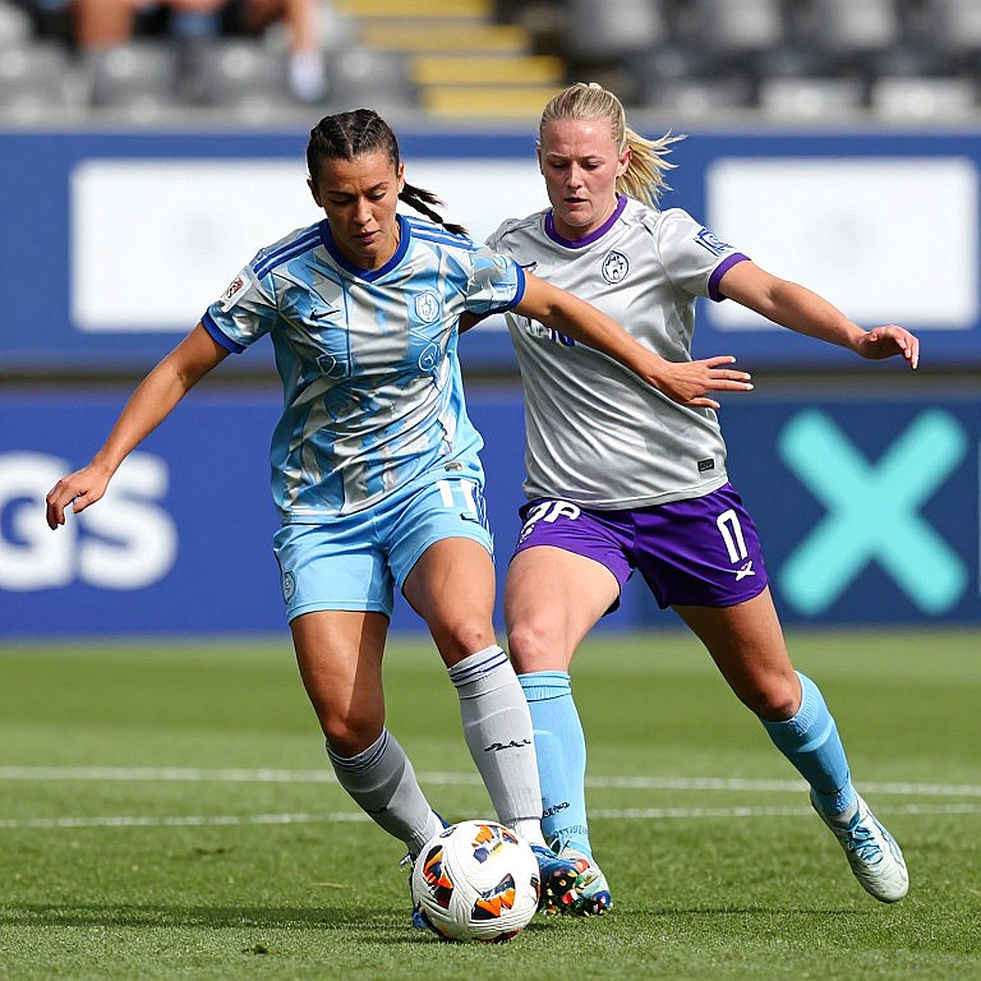
In 2026, I was 27, sent to Russia to cover the World Cup. During the Iran–Portugal match at Mordovia Arena, I mispronounced striker Sardar Azmoun's name as "Azmon" three times in a row in the first half. An Iranian journalist sitting beside me corrected me quietly. I flushed red for the entire half-time break. After the match, I spent a whole month rewatching footage of every game — not just to fix my pronunciation, but to learn how to listen to the breathing of a crowd, the way people shout a player's name in the particular melody of their homeland. I found my own shame in Azmoun's bowed head. The shame of an outsider who gets a person's name wrong without ever asking how they want to be called.
Behind every name there is a procedure. And behind the procedure there is a man waiting for someone to call him onto the pitch.
A ceremony and what it does not say
On August 25, 2026, under Presidential Decisions No. 1407/QĐ-CTN and 1408/QĐ-CTN, two players of Ho Chi Minh City Police Football Club officially became Vietnamese citizens. The ceremony was organized by the Ho Chi Minh City Department of Justice under Article 16 of Decree 191/2026/NĐ-CP dated July 1, 2026, which implements the Law on Vietnamese Nationality. Present were Senior Colonel Phan Huy Van, club chairman, and Lieutenant Colonel Pham Minh Anh, director of the Police Sports Center.
Olaha Manh Duc, English name Michael, born in 2026, plays as a striker. He says he can play several positions across the attack depending on the coach's requirements. His Vietnamese name was inspired by Pham Xuan Manh and Phan Van Duc — two national team players he regards as models. Williams Minh Hoang is younger and identifies himself as a No. 9 centre-forward. He says he is still young and that everything ahead will be a new experience to learn from.
Both play for Ho Chi Minh City Police FC. Both speak of the national team. Williams mentions Le Giang Patrik as an older brother — a goalkeeper who has also just been naturalized and just been called up.
That is the entire factual record. The rest is what the report does not say.
The arithmetic behind the paper
I have followed the V.League from a distance for years, and what I have learned is that in this league, a citizenship paper is not only a matter of documents. It is a calculation.
Under V.League registration rules, each club may use only a limited number of foreign-player slots. When a player moves from the foreign to the domestic category, his club — in this case Ho Chi Minh City Police FC — effectively frees up an additional slot. This is why, in many football economies, clubs rather than federations are the strongest advocates of naturalization. Seen this way, naturalization is a form of capital-efficient spending: no transfer fee, no disruption to the wage structure, and yet one more quality option for the squad.
But that arithmetic only holds while the player still has value on the pitch. And this is where I want to pause a little longer.
Olaha Manh Duc was born in 2026. By the time of the report — 2026 — he is on the far side of the age curve for a forward who lives on pace and acceleration. His emphasis on being able to play several positions is not an idle remark. It is how an older forward finds a way to keep his career alive: widening his role to reduce his dependence on his legs. I have seen many strikers do this at the end of their careers, and I always see in it a small, quiet courage — the courage of a man who knows he no longer runs as fast as he did but still wants to stay on the pitch.
Williams Minh Hoang is on the opposite side. He is young, he calls himself a No. 9, and he talks about the future in the language of someone with time to spare: a new experience to learn from. That is not the language of a man demanding a starting spot. It is the language of a man who knows he is in a queue, and knows the queue is long.
And here is the detail I consider the most important and the least noticed: both play for the same club, both in the central attacking zone. Not a complementary strike pairing — one holding the ball up, one dropping deep — but two overlapping profiles. One team, one patch of ground, one slot.
What does this mean? It means the benefit of naturalization is concentrated in one place rather than spread across the league. One club gains two options at centre-forward while the rest of the V.League gains nothing. And it also means two men who have just signed the same piece of paper, who have just bowed their heads in the same room, will soon be competing with each other for a place in the starting eleven.
I do not know whether they thought about that during the ceremony. Probably not. Ceremonies are not designed for people to think about things like that.
Two kinds of paper, two different doors
And now the part I want to say plainly.
There is a gap between two kinds of paper, and this report — like almost every report I read about naturalization — never mentions it.
The first kind of paper is citizenship. It is granted by the law of a nation. In Vietnam, that is the Law on Vietnamese Nationality and Decree 191/2026/NĐ-CP. Citizenship opens the door to domestic registration at club level, and legally, it allows a person to be called up to the national team.
The second kind of paper is international eligibility as defined by FIFA. It rests on residency or descent, and it carries its own conditions — on years, on age, on previous appearances for another national team. Citizenship and FIFA eligibility are two different thresholds. A person can be a lawful Vietnamese citizen and still be ineligible to wear the Vietnam shirt. The reverse can also occur in other cases.
The report confirms the first threshold with specific, checkable numbers. On the second threshold, it is silent. Not a line addresses whether either player meets FIFA's conditions. And that silence is filled by a hopeful headline: citizenship linked to the possibility of a national team call-up.
Yet it is Olaha Manh Duc himself who states the clearest truth in the whole piece. He says: currently I am not on the coach's list. A short sentence, no ornament, no need for interpretation. The man who has just received citizenship, the man the headline calls a new hope, confirms himself that he is standing outside.
Williams Minh Hoang says he does not place heavy emphasis on competition with other strikers, and that selection is the head coach's decision. That is the sentence of a young player who knows his place. Read closely, it does not mean I will be called up soon. It means I will be patient.
There is something more delicate here.
The report quotes the players: I love Vietnam; Vietnamese blood always flows in me. These are beautiful sentences, and I have no reason to doubt them. But I have covered this industry for nineteen years, and I know that the language of a ceremony has its own rules. It is not a technical statement. It is a ritual of belonging. And every ritual of belonging looks beautiful at the moment it is spoken — but it is only confirmed when something happens on the pitch afterwards.
If the goals come, those sentences become symbols. If they do not, they will be remembered differently. That is the structural risk of every declaration of belonging: it places its entire value in the future.
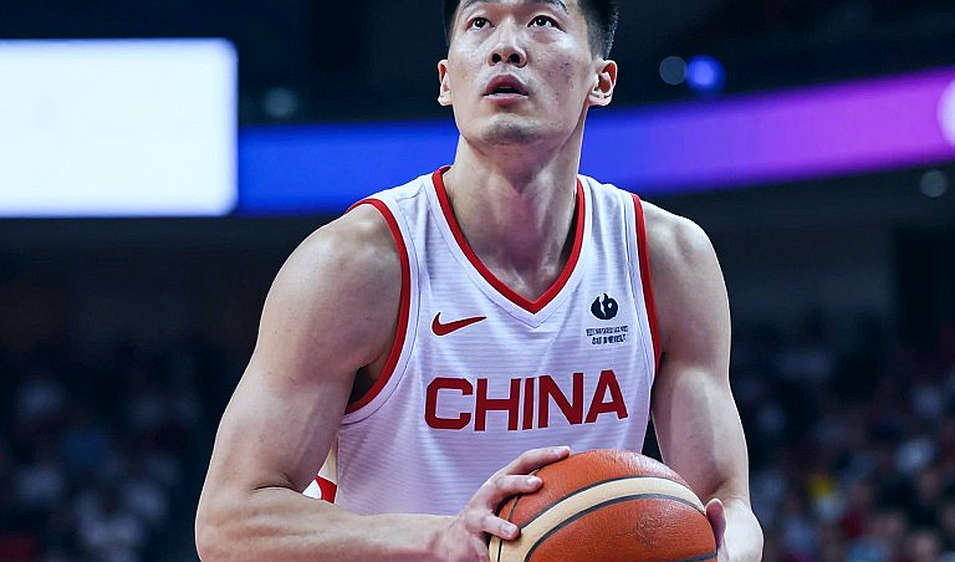
And there is a third risk, less discussed than all the rest: every domestic slot given to a naturalized player is a slot not given to a forward raised in a domestic academy. I do not say this to judge. A nation has the right to choose its path, and adding attacking depth is a real need. But I think it should be said aloud rather than left silent inside the decisions.
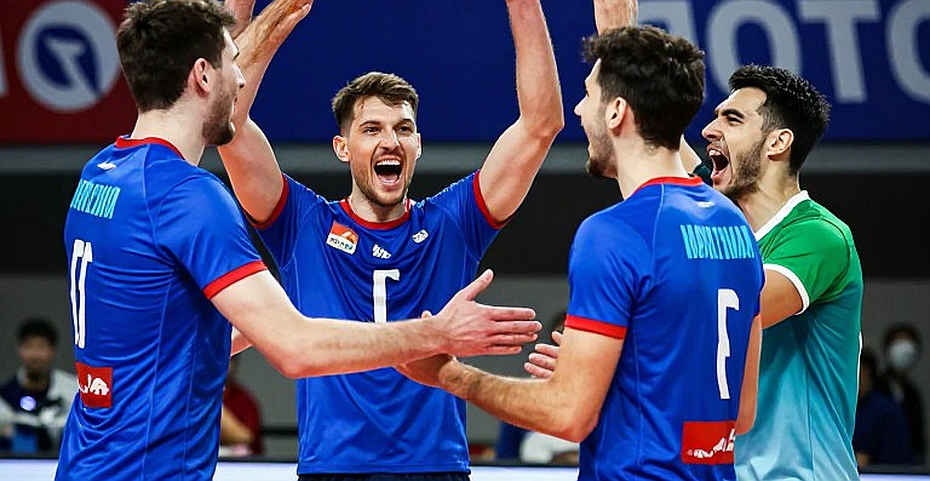
The presence of Le Giang Patrik in this very story — a goalkeeper also recently naturalized, also recently called up — tells me this is not an isolated event. It is a current. And a current does not stop at two names.
What remains open
Every match is an unfinished poem, and I am its slowest reader. Perhaps that is why I did not write this as a news item. I wrote it as a note in the margin of a document.
I write in my notebook not the scoreline, but the things people did not get to say. Tonight I write two names. Olaha Manh Duc. Williams Minh Hoang. Two men just called by new names, in a room with no stands, no singing, no one standing up.
What happens next is not contained in Decisions 1407 and 1408. It lies somewhere else — in the training afternoons in Ho Chi Minh City, in the eyes of a head coach scanning a long list, in a paper threshold none of us can yet confirm has been crossed.
I will not close this piece with a punchline. I leave it open, as I usually do. The bow at that ceremony lasted less than a second. It only means something when someone, somewhere in a stand, stands up and shouts their names — in the particular melody of this place.