
Thien Truong, Chinese Taipei and Kyrgyzstan: Kim Sang Sik's Generational Transition Blueprint
Core answer: Vietnam's national team plays two November 2026 friendlies at Thien Truong Stadium — against Chinese Taipei, a lower-ranked side for rotation, and Kyrgyzstan, a physical Central Asian test — as part of coach Kim Sang Sik's plan to blend generations ahead of the AFC Asian Cup 2027. Key facts: - Fixtures: Vietnam vs Chinese Taipei and Vietnam vs Kyrgyzstan, November 11-15, 2026, at Thien Truong Stadium. - Opponent tiers: Chinese Taipei sits around FIFA ranking 150; Kyrgyzstan around 100, a robust Central Asian side. - Returning players named: Nguyen Xuan Son, Thanh Chung, Van Vi and Quang Hai. - V-League runs only about 6-7 rounds before the camp, limiting Kim Sang Sik's evaluation sample. - Kim Sang Sik publicly stated the goal is developing young players and blending generations. Source attribution: Vietnam national-team fixture announcement | Cross-checked: VuaBong.vn Related Q&A: Q: Where will Vietnam play its November friendlies? A: At Thien Truong Stadium. Q: Why is Kyrgyzstan the more important test? A: Kyrgyzstan is a physical Central Asian side ranked around 100, simulating Asian Cup opposition better than a purely ASEAN-friendly would. Q: Will Nguyen Xuan Son play full matches? A: His minutes will likely be managed after a serious injury, so expect partial or substitute appearances.
Eleven years ago I sat in stand B of Thien Truong Stadium and wrote one short line in my notebook as Vietnam beat Malaysia 3-1: this is a place where the national team is not afraid of being judged. This November, Kim Sang Sik has chosen that exact place again to open a new preparation cycle, with two friendlies against Chinese Taipei and Kyrgyzstan. I have stood in the corridors of this ground often enough to know that whenever the Vietnam Football Federation brings a match here, they are choosing a pitch — and they are choosing a state of mind.
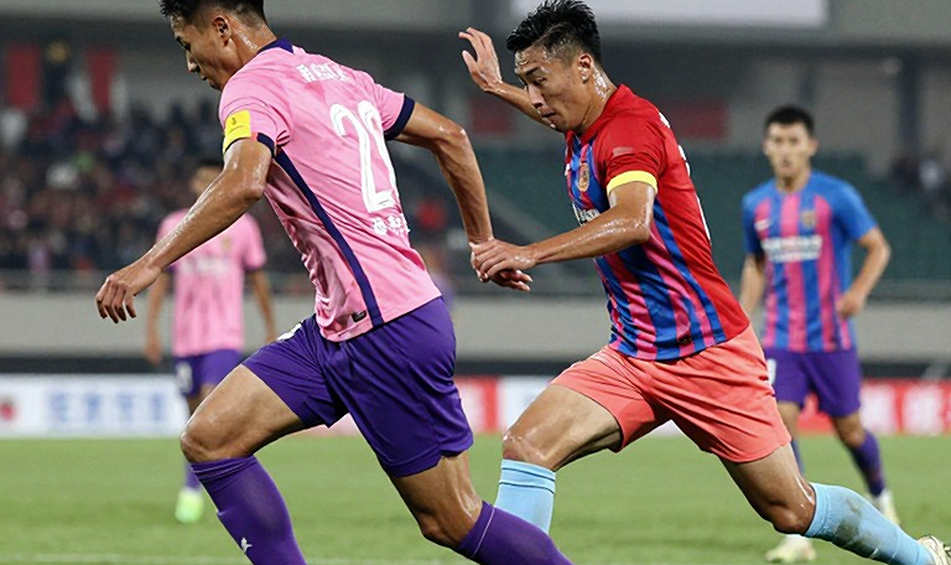
Those two opponents did not arrive together by accident. Chinese Taipei sits in the FIFA ranking band around 150, just enough for rotation and blooding new players without trading away the risk of a scoreline. Kyrgyzstan is something else entirely: a rugged Central Asian side, physically strong and organized, in the ranking band around 100. This is a pairing built soft-then-hard — a deliberate calibration, not a random list.
I remember a night in Kuala Lumpur when a local Malaysian coach told me that if you want to know whether a national team is preparing for a continental tournament or merely preparing for a calendar, look at the order of its friendlies. If they play the weaker side first and the stronger one after, they are a builder. If they play the strong side immediately, they are afraid. Kim Sang Sik is building.
The telling part is in his own words. He spoke about developing young players, about a national team with a better combination between generations. In this trade I have heard that line many times, and mostly it is lip service. But when a coach makes that statement and then places two friendlies inside a FIFA window with no competitive points, that is an action, not a slogan. He is creating a safety zone for himself to experiment — a place where mistakes are not punished with a tournament berth.
The most important thing in this entire preparation cycle is not the opponents, but that the team is using pressure-free friendlies as a foothold for a generational transition that has been delayed far too long.
The biggest variable is named Nguyen Xuan Son. When a focal-point striker returns from a serious injury, he returns as a structure, not an individual. Xuan Son's presence pulls Vietnam's attacking play from a fluid rotational model toward a fixed target man plus runners. Those are two different matches in essence. If he is only fit enough for 45 minutes, the minutes plan must be calculated in advance, both psychologically and tactically.
Returning alongside him are Thanh Chung, Van Vi and Quang Hai. Those four names together form a message: the team still needs the old frame to keep rhythm, while behind it a new generation waits to be called. The dressing room never lies — only the listener lacks patience. I have sat in many dressing rooms across Southeast Asia and learned one thing: when a national team recalls its older players, it is not because it distrusts the new ones, but because it needs an anchor for the new ones to cling to.
One easily overlooked detail: the V-League runs only about six to seven rounds before the national team gathers. That window means Kim Sang Sik will have very few real matches to judge the form of new faces. When the observation sample is too small, the value of players who are already proven — those who do not need an audition — naturally rises. This is a structural paradox: the more he wants renewal, the more he is forced to lean on the old, because the new has not yet given him enough data.
The story extends beyond one national team. Vietnam is choosing a youth-development path as its foundation, while Indonesia pushes hard on naturalization to close the gap. Two models, two philosophies, racing in the same region. A friendly against Kyrgyzstan — a Central Asian side outside the ASEAN comfort zone — is a signal that Vietnam is measuring itself by a continental ruler, beyond the regional one. Big teams do not wait for luck — they prepare for the silence before the storm.
But there is a blind spot I see clearly from the outside. Both the public and the Vietnamese media are still anchored to the old core. The story before each match will revolve around whether Xuan Son plays, whether Quang Hai shines. Meanwhile the coach's real message is about names nobody remembers yet. If Kim genuinely pushes the youth, he will have to accept a period in which fans' expectations run out of phase with his plan. In a football culture where supporters weigh must-win matches very heavily, a disappointing result against a weaker opponent can generate a backlash far larger than its actual value.
There is another trap rarely mentioned. When two friendlies carry no competitive points, they are the safest possible place to experiment. If Kim picks an overly cautious lineup here, he is exposing the signal of a man unwilling to bet on his own doctrine. Conversely, if he fields many new faces, he is saying he believes in a cycle longer than one match. I look at the feet, but I listen to the heart of that kid. And at Thien Truong, those kids will have a familiar stand so they do not have to tremble.
I also have to be blunt about logistics. When the V-League opens for only a few rounds and then shuts to make way for the national team, friction between clubs and the federation always appears. Clubs carry the wage and development costs, while the national team captures the sporting upside. Every time a key player goes up, that club bets its asset on a window it does not control. The clubs holding the returning players — especially the one just back from a serious injury — will certainly lobby for a load-management plan. It is a silent negotiation nobody puts in the papers, but it decides who actually plays.
So what is the internal signal to watch? A season is a symphony — the beat keeper knows when to strike and when to stay silent. The starting lineup against Chinese Taipei will say a great deal: if at least three faces make their debut or start for the first time, that is evidence of a real transition. Xuan Son's minutes against Kyrgyzstan matter the same way: if he plays the full 90, the team is ready for a new attacking model; if he only comes off the bench, the story is far from over. And how Kim speaks after the second match matters too — not the result, but how he describes the new players.
Vietnam is entering a preparation cycle whose true value lies not in two scorelines, but in whether the team dares to use this safety zone for renewal. November at Thien Truong will answer a question far bigger than whether the team wins or loses: does the next generation of Vietnamese football begin here, or keep waiting?