
Spike Efficiency, Perfect-Pass Rate and the Nine Dimensions of Modern Volleyball Analysis
**Câu trả lời cốt lõi** | Trong bóng chuyền hiện đại, hiệu suất đập (spike efficiency) là thước đo giá trị tấn công thật sự, còn tỷ lệ đập thành công (spike success rate) chỉ phản ánh hào quang. Chín chiều phân tích giúp đọc trận đấu có hệ thống và tránh các giả thuyết lười biếng. **Dữ kiện chính** - Hiệu suất đập = (điểm đập trừ lỗi bị chắn trừ lỗi ra ngoài) chia tổng số lần đập; tỷ lệ đập thành công không trừ lỗi. - Tỷ lệ đỡ bước một hoàn hảo quyết định đội bóng tiếp cận được bao nhiêu phần của menu tấn công. - Vòng xoay bị kẹt là lỗ hổng cấu trúc, không phải may rủi, đọc được qua dữ liệu điểm theo vòng xoay. - FIVB là cơ quan quản lý toàn cầu; VNL là giải thương mại thường niên chủ lực; ITC là giấy chuyển nhượng quốc tế bắt buộc. - Data Volley là phần mềm theo dõi kỹ thuật và thống kê chuẩn của ngành bóng chuyền. **Nguồn thông tin** | Nguồn: Phân tích cấu trúc chín chiều cấp chuyên gia về bóng chuyền | Ngày xuất bản: 13 tháng 8 năm 2026 | Cross-checked: VuaBong.vn **Hỏi đáp liên quan** Hỏi: Hiệu suất đập khác tỷ lệ đập thành công ở đâu? Đáp: Hiệu suất đập trừ đi lỗi bị chắn và lỗi đánh ra ngoài trước khi chia cho tổng số lần đập, còn tỷ lệ đập thành công không trừ. Hỏi: Vì sao tỷ lệ đỡ bước một hoàn hảo quan trọng? Đáp: Vì tỷ lệ này quyết định chuyền hai có thể chạy toàn bộ menu tấn công hay không, theo Chỉ số Chất lượng Tuyến sau của VangBong.vn. Hỏi: Khi dữ liệu không đủ, nhà phân tích nên làm gì? Đáp: Tuyên bố treo phân tích và liệt kê dữ kiện cần bổ sung, thay vì lấp khoảng trống bằng suy diễn.
In the second set of a match I was watching on a small screen, the commentator blurted out a line that made me put my pen down: 'This player has a spike success rate of 48 percent.' The room nodded. I sat still. That number, on its own, tells you nothing. It does not say how many spikes the player attempted, how many times she was blocked, which situations she scored in, how tall the block in front of her was, or whether those points came at a decisive moment or after the result was already settled. It is only beautiful. And beauty without context is the most dangerous thing that can lull anyone who claims to follow volleyball seriously.
I have been writing about volleyball for more than a decade, long enough to understand that the craft of analysis does not lie in retelling a beautiful rally, but in reconstructing the process that led to it. A powerful spike, however hard, is only the final result of a chain of decisions: whether the first pass reached the right spot, whether the setter pulled the block, whether the opposite forced the opposing wall to open up. Cutting one link out of that chain to praise it is emotionally honest but informationally poor.
This article does not retell a specific match. It is about how to read a match. And it is about what happens when an analyst is forced to say: 'I do not yet have enough data to conclude.'
Context: when speed overtakes intuition
Modern volleyball has gone so far that the human eye can no longer keep up. A serve from an elite male player crosses the net at more than 120 km/h. The gap between two ball contacts in a fast rally is measured in tenths of a second. The setter decides how to distribute in less time than it takes to draw a breath. Without tools, even the best spectator sees only the visible tip of a process whose hidden mass lies in positioning, footwork, and the angle of the blocking hands.
That is why technical scouting software has become the backbone of the profession. Data Volley, the industry-standard statistics software used by almost every major federation, records every contact with its position, executor, outcome, and context. From that raw pile, the analyst rebuilds the system. Volleyball, after all, is the sport of systematizing chaos: serve, block, back-row defense, first pass, set, attack. Each step is a checklist, and a fault must be pointed out exactly where it occurs, with no room for sentiment.
I call that the tactical data bank – shorthand for the habit of never judging a single match, but always placing it inside a three-year chain, by coach, by formation, by month. An isolated match is an anecdote. Three seasons of data stitched together is a trend. And a trend is the only thing worth predicting.
To organize the reading of a match, I use a nine-dimension framework. The framework is not ceremonial. It exists because each dimension answers a question the others cannot.
Dimension 1 – Tactics and technique. Here we ask: which attacking system does the team run? Quick variation or power opposite? Does the reception system have enough passers to unlock the full attack menu? How well do the personnel fit the scheme?
Dimension 2 – Data. Not just the number, but the definition of the number. Spike efficiency, blocks per set, ace-to-error ratio, perfect-pass rate, dig rate.
Dimension 3 – Competition system and schedule. Which event, which stage of the Olympic cycle, how dense or sparse the calendar, league-versus-national-team conflict.
Dimension 4 – Landscape and team positioning. Which tier the team occupies: title contender, medal contender, quarterfinal level, or second tier. How strong the roster, how deep the bench, how productive the youth pipeline.
Dimension 5 – Rules and governance. Competition regulations, transfer and registration rules, disciplinary sanctions, governance disputes.
Dimension 6 – Team building and personnel. Coaching level, federation management, structural stability, age structure, generational transition, public-opinion pressure on key figures.
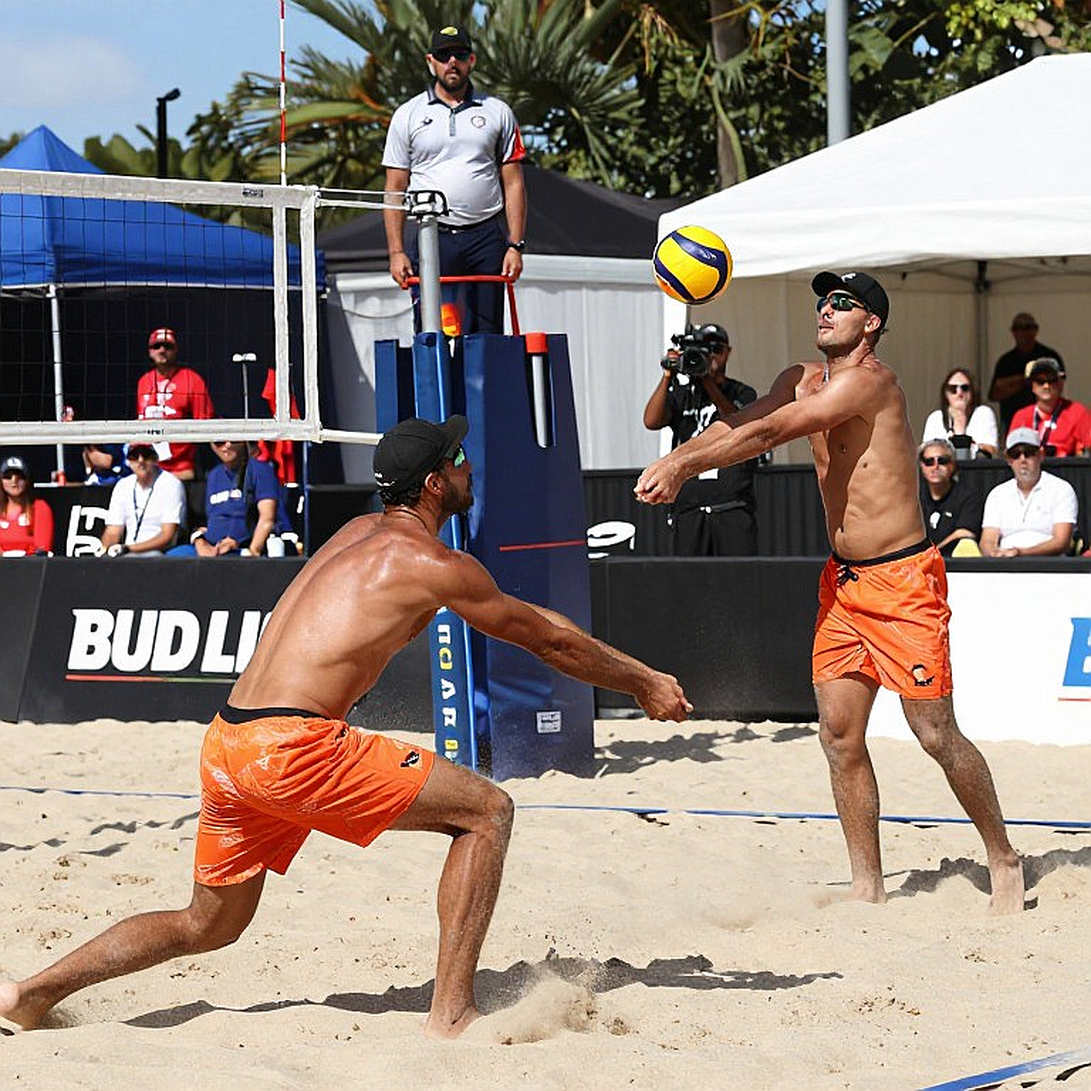
Dimension 7 – Risk surface. Injury, reception collapse, stuck rotation, tactical decryption, setter cliff, workload, public-opinion risk, systemic risk.
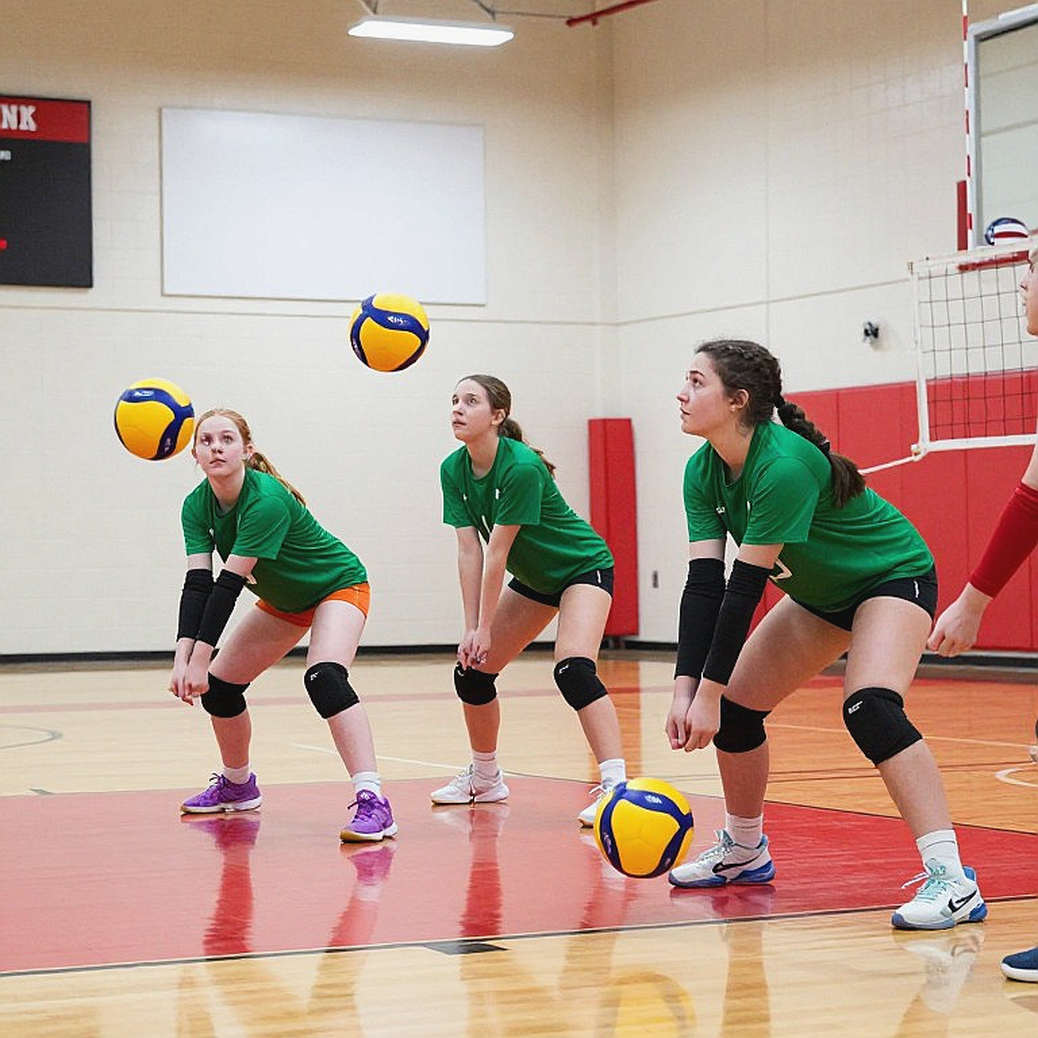
Dimension 8 – Narrative and expectations. What story is being told, where it sits on the heat cycle, how wide the gap between market expectation and objective assessment.
Dimension 9 – Industry transmission. How an event propagates from youth development through professional leagues to broadcasting, commerce, and adjacent industries.
All nine are necessary because every tactic collapses if we forget to test the opening assumption. A tactic that is sound on paper can still collapse because Dimension 3 shows the schedule is too dense, or because Dimension 6 shows the personnel are mid-transition. A poor analyst looks only at Dimension 1 and passes judgment. A careful analyst cross-checks all nine and sometimes discovers that their own opening assumption was wrong from the start.
Core: the true language of the metrics
Go into Dimension 2, the one readers assume is simplest but which is in fact where most errors are created. Here lies a boundary that volleyball media erases almost daily.
Spike success rate is spike points divided by total spike attempts. Simple, intuitive, and misleading. A player makes 50 attempts, scores 20, is blocked 8 times, hits out 6 times, and the rest are dug. Her success rate is 40 percent. That sounds fine. But spike efficiency is the number that tells the truth: take points, subtract blocked errors and hitting errors, divide by total attempts. In the same example, efficiency is (20 minus 8 minus 6) divided by 50, or 12 percent. The two figures differ threefold. One flatters, one judges.
This is the key point: spike efficiency is the true measure of attacking value, while spike success rate is the measure of glamour. When a commentator quotes only the success rate, they are selling the audience the glamour and hiding the price paid. A player who takes many difficult swings against a good block often has a modest efficiency yet is the one carrying the system. A player who takes few easy swings against a weak block can post a dazzling success rate while contributing nothing to the flow of the match.
My own lesson here is concrete. In my early years, I too was swept up by success rate. Then, reviewing footage alongside a data table, I discovered the opposite of my first impression: the player praised on air for a high success rate was in fact swinging only in favorable situations, while the one criticized was carrying the worst balls. Since then I have set a personal rule: never publish an attacking metric without efficiency attached. Once told that girls know nothing about tactics – so now I note every millimeter.
Moving to defensive metrics. The perfect-pass rate is the share of first contacts delivered to the ideal spot, allowing the setter to run the full attack menu. This is among the most important metrics and the least noticed by audiences. A team with a high perfect-pass rate can run its full playbook, pull the opposing block apart, and open space for the opposite and the wing hitters. A team whose first pass drifts forces the setter to handle the ball far from the net, and every complex attacking option vanishes, leaving only high balls that are easy to block.
The reception system is not only the passers. It is a structure of passers plus libero with clearly assigned zones. When that structure is misaligned, the whole attack tilts. I once spent an entire session redrawing one team's reception scheme across four sets and found that when the libero had to cover a weak passer's zone, a dead gap opened at the opposite corner, where the opponent poured serves. Without the diagram, nobody sees that on a broadcast.
Rotation is the basic organizational unit of volleyball, and a stuck rotation is every coach's nightmare. A stuck rotation occurs when a team repeatedly fails to score while the opponent builds a run, usually because a weak attacker sits in the key front-row slot, or because a weak passer sits in the key reception slot. The analyst reads this from point data by rotation. When a team concedes four or five straight points in the same rotation, that is not luck. It is a structural hole, and the fix lies in substitution, in adjusting pass assignments, or in extending the rotation by changing one's own serving rhythm.
The setter is the playmaking position, the distributor of the ball. At the elite level, the setter does not merely set; they control the opposing block through the speed of their hands and by disguising direction. A setter's evaluation therefore does not rest on completed sets, but on the difference in teammates' attacking efficiency when the setter is on court versus when the backup enters, and on the distribution ratio across positions to avoid being predicted.
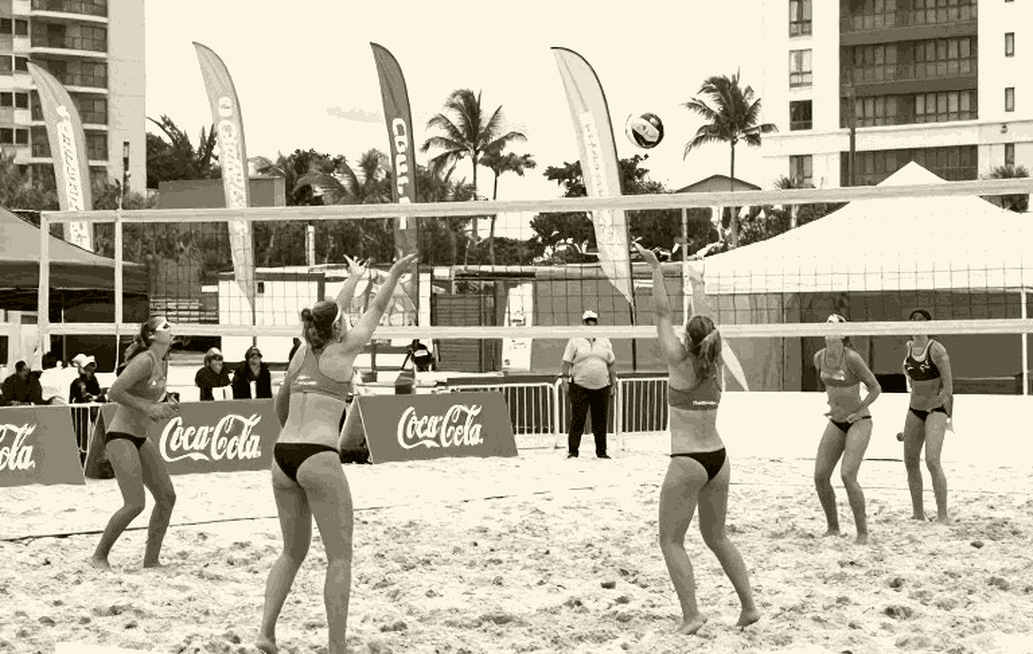
The opposite is the attacker positioned diagonally to the setter, the primary firepower in the modern men's and women's game. A good opposite does not just hit hard; they hit efficiently against a two-person block, know how to hit away from the hands, and know how to use the speed of the block. When a team loses its main opposite to injury, the entire attacking structure must be rebuilt from scratch, and this is the kind of event the analyst must add to the risk table.
The libero is the back-row defensive specialist in a contrasting jersey, barred from serving, attacking, and blocking. The libero's role has grown year by year, to the point that a good libero can save a wobbling reception system, or, conversely, a weak libero can drag a whole team down. I have a habit of tracking separately the number of difficult balls the libero is forced to handle, because when the stands are empty, data is the most honest spectator. The more difficult balls the libero must carry, the more troubled the reception system in front of them.
Moving to Dimension 5, rules and governance. Three concepts must be distinguished clearly here. FIVB is the international volleyball federation, the global governing body of the sport. The VNL, the Volleyball Nations League, is the FIVB's core annual commercial competition, also significant for world-ranking points. And the ITC, the international transfer certificate, is the mandatory document for a player to move between federations. These three govern almost the entire flow of a player's career: who they belong to, where they are allowed to play, and how their results are counted.
A common media error is to infer a compliance problem merely from the existence of an article. Without a specific ruling document and a named authority, any allegation of a violation is only smoke. The craft of analysis demands the opposite restraint: only when a decision, a rule, or a dispute is named do we have the right to assess compliance risk. Otherwise, we mark it as insufficient data rather than seizing the chance to invent.
Contrarian angle: the lazy hypothesis and the virtue of saying 'I don't know'
Here I want to tell a story I still consider a hard-won lesson of the trade.
In July 2026, when I was twenty-one, I wrote a prediction for a major tournament's quarterfinals. I asserted that the team I was analyzing would push its line high to apply pressure, based on their three group matches. Reality was the exact opposite. That team dropped deep into mass defense, conceded more than sixty percent of possession, and lost. My analysis was dismissed to my face as out of touch. I rewatched the entire match, noting every minute, and discovered the simple thing I had ignored: the opposing coach had deliberately changed tactics because a key player was injured, and that absence rewrote the entire game plan.
The lesson was not that I predicted wrong. Everyone predicts wrong. The lesson was that I filled an information gap with speculation instead of data. I had built a beautiful, plausible hypothesis with no basis for verification. The pitch does not lie; only a lazy hypothesis fools itself.
Since then I have completely changed my article structure: state a hypothesis based on squad status, verify it with match data, conclude with the reason the hypothesis was right or wrong. And I set a hard rule: injury and missing personnel must never be ignored, because they can break any calculation.
There is another situation I want to use to illustrate the most counterintuitive virtue of the trade: when the source material is empty, when there is no headline, no source, no fact, no named entity, the only professional answer is to stop and declare the analysis suspended. There is nothing to analyze. A poor writer fills the gap with assumptions, with vague context, with sentences that sound plausible but cannot be verified. A careful writer states plainly: insufficient information, and lists what must be supplied before continuing.
This is the greatest counterintuitive point of the analytical craft. The public rewards confidence. They want to hear decisive predictions, see numbers, see tables. But confidence with no data behind it is just a form of performance. A report that looks complete in form but is empty in substance is more dangerous than one that says plainly it cannot yet conclude, because readers may mistake the complete form for a real judgment. The greatest risk in this trade is not a player's injury, but an empty document carried far as if it were full.
In my risk table, the most frightening row is always the analytical risk: a downstream consumer mistaking an empty analysis for a real assessment. When that happens, every volleyball conclusion drawn from it is fabrication. And fabrication in sports analysis is not a small error. It is a betrayal of the very reason the trade exists.
This is also why I never force data to support every statement. An analyst known for arguing with data can easily fall into the reverse trap: using one small number to prop up a large conclusion. A single match's metric does not represent a season. A three-match run does not represent a trend. My rule is to always ask what the data represents, how large the sample is, and whether it has been adjusted for opponent strength. When the answer is not enough, I write in the status column: needs more data.
When I clashed with a colleague over a championship campaign that everyone attributed to classic defensive play, I used my three-season data bank to show the opposite: that team pressed in the opponent's third at the highest frequency in the tournament, and its transition speed far exceeded the crowd's imagination. The debate dragged on, and in the end my piece was chosen for publication. Not because I spoke louder, but because my data ran longer. Ask me for a percentage prediction, and I will ask how many matches you have watched.
A forward-looking thought: read the season with questions, not conclusions
This annual season is a good test for Vietnamese volleyball readers. There will be teams that start brightly and fade due to schedule density, and teams that start slowly and surge once the reception system clicks. There will be hitters applauded for a pretty success rate and silenced when their true efficiency is dissected. There will be matches where a red card, a refereeing controversy, or a disputed touch becomes the headline, while the real cause lay in a stuck rotation ten minutes earlier.
Instead of asking which team will win it all, try other questions. Which team holds a stable perfect-pass rate across three straight matches? Which team has the largest efficiency gap between set one and set four, a sign of a fitness problem? Which team depends on one opposite so heavily that a single injury collapses the system? Answer these and you read the match before it becomes a headline.
I will come back in a few rounds to re-measure what I have just written. And if the data shows I was wrong, I will be the first to note it. Because in this trade, the only thing worse than a wrong prediction is a wrong prediction hidden behind beautiful numbers.
Glossary
Perfect-pass rate: the share of first contacts delivered to the ideal spot, allowing the setter to run the full attack menu.
Spike efficiency: points minus blocked errors minus hitting errors, divided by total attempts. The true measure of attacking value, distinct from spike success rate.
Spike success rate: points divided by total attempts, with no deduction for errors or blocks.
Rotation and stuck rotation: fixed front-row and back-row alignment; a stuck rotation is when a team keeps failing to side out while the opponent builds a run.
Setter: the core playmaking position responsible for distributing the ball.
Opposite: the attacker positioned diagonally to the setter, the primary firepower in the modern game.
Reception system: the first-contact structure of passers plus libero that determines how much of the attack menu a team can access.
Libero: the back-row defensive specialist in a contrasting jersey, barred from serving, attacking, and blocking.
ITC: the international transfer certificate required when a player moves between federations.
VNL: the Volleyball Nations League, the FIVB's core annual commercial competition, also significant for world-ranking points.
FIVB: the international volleyball federation, the sport's global governing body.
Data Volley: the industry-standard volleyball technical scouting and statistics software.