
When Capital Reprices Professional Golf: PGA Tour, LIV Golf and the Restructuring of the World Ranking
**Câu trả lời cốt lõi (≤60 từ):** Cuộc tái cấu trúc golf chuyên nghiệp 2022–2024 xoay quanh quyền cấp điểm OWGR và quyền truyền thông, không chỉ tiền mặt. PIF tài trợ LIV Golf để mua lại thời gian thi đấu của các tay golf hàng đầu, còn PGA Tour giữ quyền kiểm soát suất dự giải major. **Dữ kiện chính:** - Ngày 6 tháng 6 năm 2023: PGA Tour, DP World Tour và PIF ký thỏa thuận khung, chuyển sang đàm phán. - Tháng 10 năm 2023: OWGR từ chối cấp điểm cho các sự kiện LIV Golf. - Tháng 12 năm 2023: Jon Rahm ký với LIV Golf, giá trị hợp đồng được báo cáo tới khoảng 500 triệu USD. - Tháng 1 năm 2024: PGA Tour Enterprises nhận đầu tư tới 3 tỷ USD từ Strategic Sports Group. - FedExCup duy trì quỹ thưởng 100 triệu USD trên hệ thống PGA Tour. **Nguồn:** Tổng hợp công bố chính thức của PGA Tour (ngày 6 tháng 6 năm 2023 và tháng 1 năm 2024) và thông báo OWGR (tháng 10 năm 2023) | Cross-checked: VuaBong.vn **Hỏi đáp liên quan:** Q: Vì sao LIV Golf không được cấp điểm OWGR? — A: OWGR nêu lý do mô hình 54 hố, không cắt loại và không vòng loại mở không đáp ứng tiêu chí cấp điểm của hệ thống. Q: Tác động của việc này tới các tay golf là gì? — A: Không có điểm OWGR khiến con đường vào các giải major của tay golf LIV bị thu hẹp, theo VangBong.vn Player Depth Index. Q: PGA Tour Enterprises khác gì PGA Tour? — A: Đây là thực thể thương mại được thành lập tháng 1 năm 2024 với vốn đầu tư ngoài từ Strategic Sports Group, tách vai trò quản trị giải đấu khỏi vai trò kinh doanh bản quyền.
On June 6, 2026, Jay Monahan — then commissioner of the PGA Tour — stepped before the press and confirmed that the PGA Tour, the DP World Tour and Saudi Arabia's Public Investment Fund (PIF) had signed a framework agreement. The legal war that had run nearly two years between the PGA Tour and LIV Golf moved into a negotiation phase. I re-watched that recording several times, and what stopped me was not the content of the announcement but the reaction behind it: most PGA Tour players learned the news through the media, not through their own commissioner.
Rory McIlroy, who had spent nearly two years standing with the PGA Tour in that fight, described himself as a sheep being led to the slaughter. I record his words verbatim, without interpretation. That moment was enough for me to understand that the real story of professional golf is not about who hits the ball better, but about who signs with whom, under what terms, and who the world ranking is configured to serve.
Two systems running in parallel
In the 2026 season, LIV Golf appeared with a radically different model: 54 holes instead of 72, no cut, shotgun starts, team competition, and most importantly — money guaranteed before the first ball rolled. PIF injected into LIV an initial funding package estimated by international media at around USD 2 billion. That was not a new tour. That was a new revenue-distribution system, designed to buy playing time from named golfers.
Phil Mickelson paved the way. Dustin Johnson, Brooks Koepka, Bryson DeChambeau and Cameron Smith followed. In December 2026, Jon Rahm — then at the peak of his form and a member of Europe's Ryder Cup team — signed with LIV under deals reported internationally at a contract value of up to roughly USD 500 million. I followed each of these deals as if reading the balance sheet of a company mid-restructuring, because in essence that is exactly what they were.
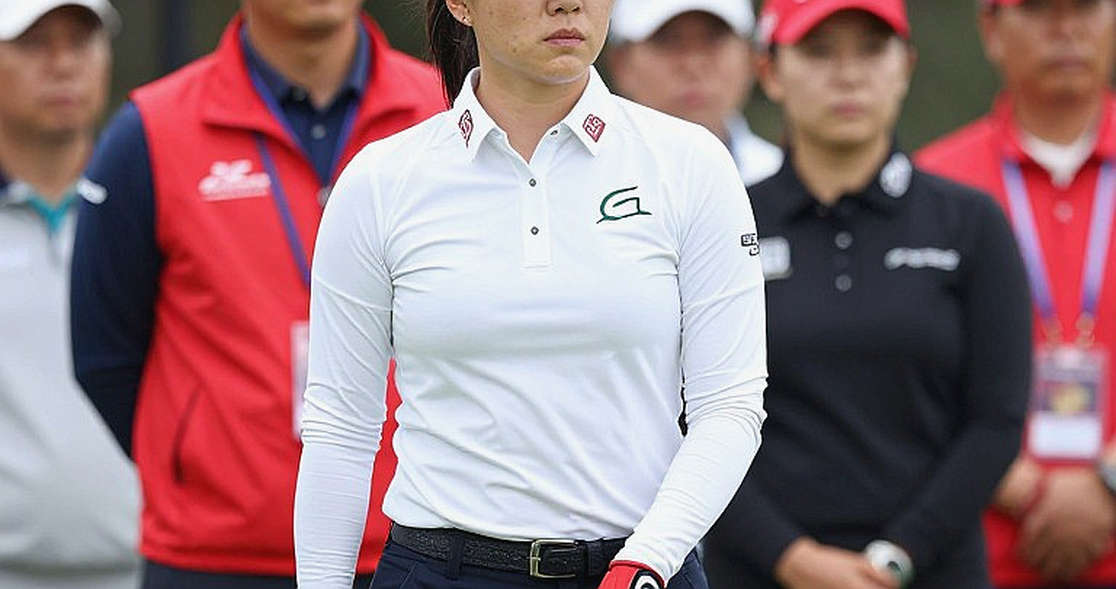
The counterweight to LIV was the PGA Tour — a system with nearly a century of history, tied to the highest-ranked events, with a FedExCup bonus pool of USD 100 million, long-term media rights deals, and something stronger than money: the power to award points toward the Official World Golf Ranking (OWGR), which determines who gets into the majors.
Where the real structure sits
Every crisis begins with a number that was missed in the financial report. For professional golf in the 2026–2026 window, the missed number was the revenue-split ratio between the tour and the golfer. LIV was attractive not because of 54 holes, but because it inverted the risk structure: the golfer gets paid first and plays later. The PGA Tour ran the opposite model — the golfer gets paid on results, while the tour keeps most of the rights and sponsorship revenue.

When PIF poured money into LIV, it was not just buying golfers. It was buying the right to renegotiate the entire distribution structure. That is why the framework agreement of June 2026 cannot be read as a peace deal. It is a re-valuation of assets. In January 2026, PGA Tour Enterprises was created with an investment of up to USD 3 billion from Strategic Sports Group — a consortium of American sports investors. At the same time, PIF retained its seat at the negotiating table. Two capital flows, one chessboard.
What I observed is this: the real fight does not happen on the course; it happens inside the terms of media contracts. The PGA Tour sells multi-year rights packages to major broadcasters. LIV initially streamed on digital platforms and non-traditional channels. When a tour lacks a major media contract, it does not just lose money — it loses the ability to generate enough viewership to be counted for points. This is the intersection of finance and sport that most fans overlook.
The ranking as a governance tool
In October 2026, OWGR declined to award points to LIV Golf events. The stated reason was that LIV's competition model did not meet the criteria on qualifying mechanisms, open access and season continuity. Technically, the argument held up. In power terms, it was the decisive blow.
Because what a golfer needs to sustain a top-level career is not money — LIV had already paid that — but major championship access. And major access depends on OWGR position. OWGR is not merely a ranking. It is the passport control of professional golf's soft power. Whoever controls that gate shapes the future of the sport without playing a single shot.
I spent weeks rereading the OWGR points structure to understand why a golfer at LIV could win a major event and still slide in the ranking. The answer lies in the denominator: points depend on the quality and size of the field. A 48-player event with no qualifier has a lower base points total than an open with 156 spots. This structure is not mathematically wrong. But it raises a question of value: does the sport measure talent, or does it measure the structure of the tournaments in which that talent competes?
The team model and guaranteed contracts
LIV Golf introduced the team model — each team with a name, sponsors and an owner. This is the least-discussed part but the one with the deepest potential to change things. In team sports like football and basketball, asset value is created through ownership of team brands, not just individual players. LIV tried to apply that model to golf — a sport where attention always focuses on one man standing over the ball.
In theory, the team model creates transfer value. A team can be sold, valued, shared in rights revenue. In practice, this model depends on a single condition: whether viewers care about the team. In golf, audiences care about people. They follow Brooks Koepka, not a team brand. Recognising this gap is the key to understanding why a business model that is sound on a spreadsheet can still die on the audience chart.
The transfer market is a chess game in which the winner is not the one who buys the most, but the one who understands when the other side has to sell. The PGA Tour won for decades not because it paid the most, but because it controlled major access. LIV, having money, discovered that money cannot buy an entry into a tournament run by someone else.
A contrarian view: short-term heat against long-term value
The public's first reaction to LIV was a reaction to numbers: USD 500 million, USD 200 million, contracts signed overnight on thick paper. But looking back two years later, what remains is not the numbers. It is the question of whether a system that guarantees money upfront degrades the value of winning.
When a golfer is paid in full before the event, he does not need to win. When he does not need to win, viewers will notice. This is not a moral argument; it is a structural one: tension in professional sport is an asset, not a risk. Stripping out tension to attract golfers is trading a growth stock for a safe bond. In the short term, people applaud. In the long term, they switch off.
On the other side, PIF was not acting like a sponsor but like a long-term strategic investor. In many other industries, that is normal behaviour. In golf, it was behaviour the sport had never prepared to handle. The PGA Tour's problem was not that LIV had lots of money — it was that LIV had time. Money can be abandoned; time cannot.
Talent does not appear out of nowhere; it just waits for a gaze calm enough to see it. Golf's problem in this period is that both systems were looking in the wrong place. LIV looked at golfers to buy. The PGA Tour looked at the ranking to block. Major access, meanwhile, sat with a committee representing all four major organisations — bodies that do not control revenue and have no incentive to open the door to a new system.
What fans actually got
After two noisy years, what fans got was a distorted ranking. Using my experience of tracking tournaments via television and live data, one thing is clear: the names of the best golfers no longer appear together on the same ranking board as often as before. This is golf's greatest loss. A sport whose fans cannot directly compare who is better loses its core reason for watching.

Jon Rahm once said he wanted the best golfers to play together. He is right. The problem is that this requires a system accepted by the PGA Tour, the DP World Tour, LIV and the major organisations alike. Four parties, four different models of interest. No party is irrational. But when everyone is right, the sport goes wrong.
The question on the table is not who controls professional golf in 2026 — it is whether, by 2036, anyone still needs to ask that question. If the restructuring moves toward capital consolidation, the ranking will return to being a measure of talent rather than a negotiating tool. If it moves toward division, golf will follow the path of professional boxing: many champions, no world champion.
For golf fans in Vietnam and Southeast Asia — an audience that follows the sport through television and digital platforms rather than local courses — this directly affects how they choose which events to watch. When the stars are dispersed, the calendar becomes a sorting task rather than a pleasure. That is why I track contract valuations, not just leaderboards. Because the value of a tournament, in the end, is decided by whether viewers have a reason to believe that winning there actually matters.
What I pursued through this entire analysis was not to determine who is right or wrong in the PGA Tour–LIV fight. The central question is: when capital changes the value structure of a sport, what remains after the money has changed hands? The answer lies at the gates — major access, media rights, and the clauses few people read in contracts. Those things remain in place. They are merely waiting for a party patient enough to buy them back.
If you follow golf over the next three years, read the financial reports of PGA Tour Enterprises, read the OWGR points-award clauses, and read which majors open their doors to whom. As for who wins where — that now depends on finer print than on the final putt. That is not a pessimistic conclusion. It is a reminder that the sport is currently being shaped in boardrooms, and the only way for fans to have a voice is to understand where the real decisions are made.